

This is a preview of our Texas 2036 newsletter launching the third episode of our Future of Texas podcast with our guest, Roy Spence, on the future of work in Texas and preparing the workforce. To receive this weekly look at our work, sign up here.
Episode 3: Texas’ Workforce Opportunity

(Left to right) Host Brad Swail talks with Roy Spence and Renzo Soto in episode three of the “Future of Texas” podcast series.
Texas is projected to add more than two million jobs over the next decade while graduating hundreds of thousands of new workers each year.
That growth creates enormous opportunity if workforce skills keep pace with the needs of the economy.
The Future of Texas series continues with a look at the workforce shaping the state’s future.
This Week’s Podcast Guest: Roy Spence
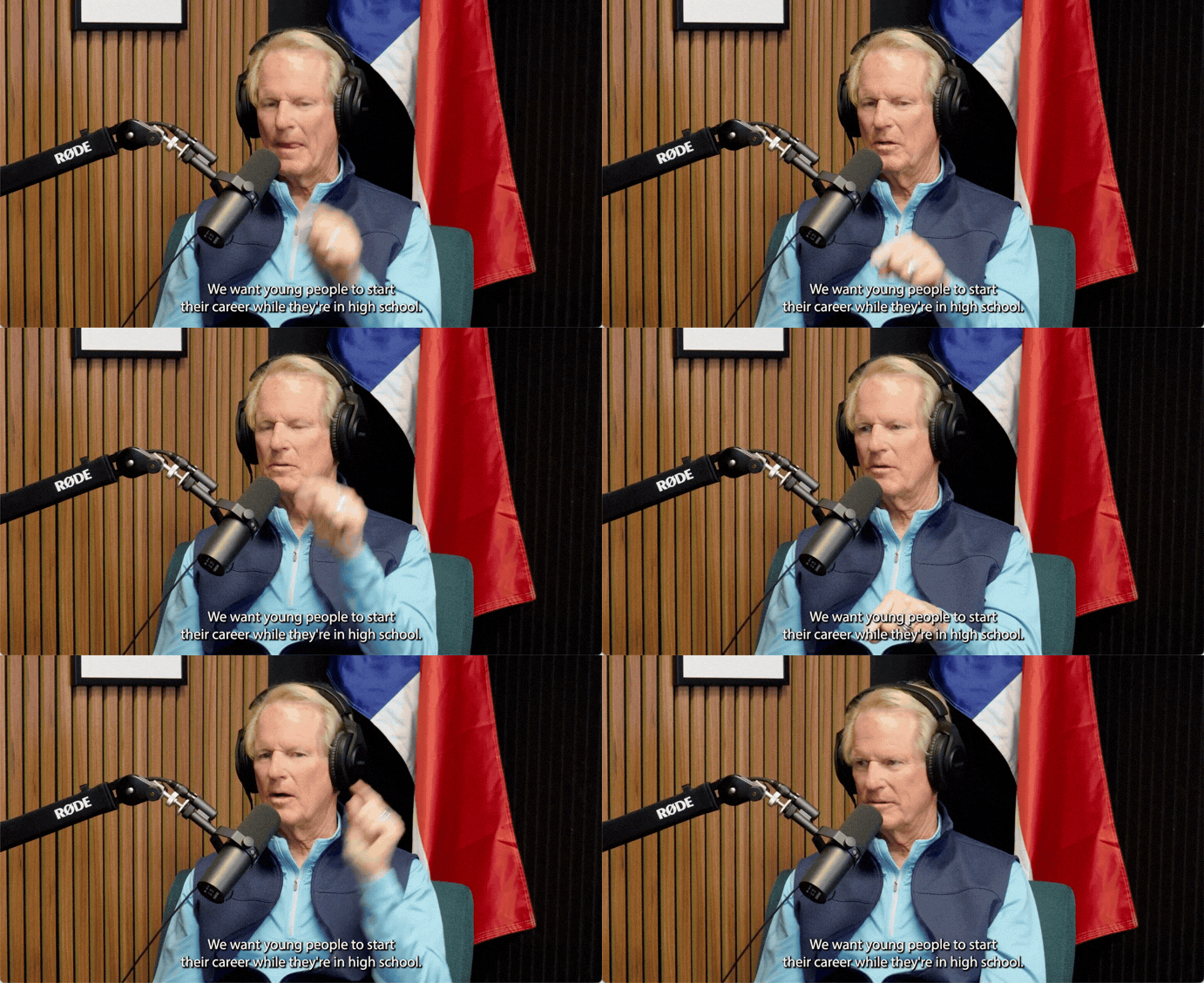
Roy Spence, co-founder of GSD&M and founder of the Purpose Institute, joins Texas 2036’s Renzo Soto to discuss how Texas is building skills, mobility and opportunity for the future workforce.
“Where your talents and the needs of the world intersect, therein lies your purpose,” Spence said in the latest episode.
📺 Watch the full episode on YouTube
🎙️Listen on Spotify or Apple Podcast
Texas’ Workforce: Its Competitive Advantage
Texas has one of the largest workforces in the country, with nearly 16 million people in the labor force.
By the numbers:
- About one in 11 U.S. jobs are located in Texas.
- Texas is projected to add about 2.1 million jobs by 2032, compared to about 4.7 million jobs nationwide.
- Texas graduates nearly 400,000 high school students each year, more than twice as many as New York or Illinois.
Taken together, these trends give Texas a powerful advantage: a fast-growing economy and one of the nation’s largest pipelines of young workers.
Employers See Opportunity, Growing Skills Gap
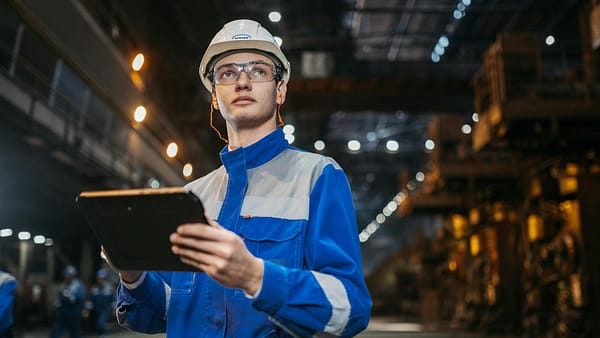
In December 2025, Texas led the nation in job openings, underscoring strong hiring demand across the state. That momentum reflects the pace of economic growth in Texas, but filling many of those roles is becoming more difficult.
- A Dallas Fed survey found that 44% of employer respondents said that “lack of hard skills” was an impediment to hiring workers.
- Nearly half of the 2.1 millions jobs to be added in Texas by 2032 will require some form of postsecondary education.
- In Texas, registered nurses remain one of the occupations with persistent shortages, while demand for electricians and software developers also continues to outpace local supply.
As Texas continues to add jobs faster than most states, the question is whether the state’s workforce pipeline can keep pace.
Did you know? The state lacks actionable insights into labor market outcomes across the state, and workers can be misclassified in workforce data.
Texas 2036 is working this interim to improve data so education and training better match job demand.
Texas Has Been Investing In Its Workforce
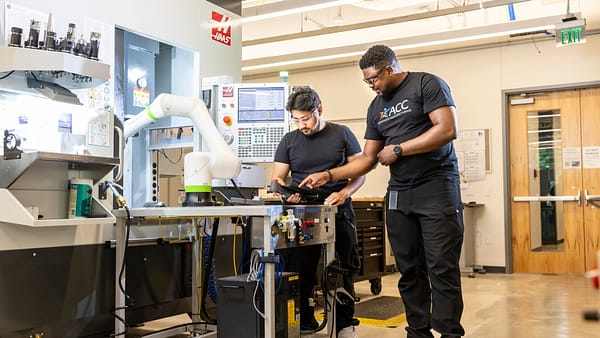
Source: Austin Community College
Texas has spent more than a decade strengthening the education-to-workforce pipeline. State leaders have expanded or increased investments in workforce-aligned outcomes such as:
- New laws aimed at aligning community colleges with workforce needs.
- Established an endowment to support the capital needs of the Texas State Technical College System.
- Expanded partnerships between high schools, community colleges and employers to ready students for high-demand careers.
In 2025, lawmakers amended the Texas Education Code to prioritize preparing high school graduates with the skills and credentials needed for work or college without remediation.
H.S. Students Explore Careers Earlier, Build Skills
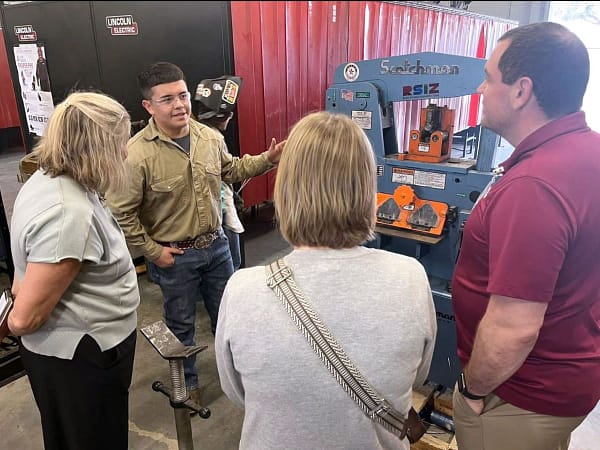
Photo contributed by Michael Gonzalez/Rural School Innovation Zone
Today, Texas schools and employers are expanding opportunities for students to explore careers earlier and build skills in high school.
- Career and Technical Education: About 1.35 million students participate each year across fields like health care, manufacturing, energy, construction and technology.
- Dual Credit: Nearly 250,000 Texas high school students take college courses in high school, a 21-fold increase since 1999.
🌟 Spotlight: The Make It Movement, a nonprofit founded by Roy Spence, connects high school students to career and education pathways aligned with their interests while reinforcing that there is more than one way to succeed.
✅ The goal is not just high school graduation, but readiness for what comes next.
What We’re Seeing: AI and the Future of Work

Source: Austin Community College
The next transformation of work may arrive faster than expected. Artificial intelligence is already reshaping how work gets done.
Here’s how the tech is growing now:
- A 2025 report cataloging 86 high-impact AI use cases across six major industries observed that agentic AI systems — capable of executing complex, multi-step business functions with minimal human input — are moving from experimentation to enterprise deployment. (Deloitte)
- Up to five million humanoid robots could be deployed globally by 2040. (McKinsey)
What’s changing now:
As companies reorganize around AI, economists note widespread job losses have not yet materialized. For Texas, the challenge is not just preparing students for today’s jobs, but building a system that can adapt as quickly as the economy.
Exploring 3 Big Qs Shaping Texas’ Workforce:
1. Will more Texas students graduate high school ready for what comes next?
Despite progress, too many students leave high school without a clear path into college, military or a career.
Expanding dual credit, career and technical education, and industry-recognized credentials is helping more students graduate with real options and real skills. The challenge now is scale.
2. Can Texas close the gap between job creation and workforce preparation?
Texas businesses are creating jobs faster than almost any state, yet employers across industries struggle to find workers with the right skills and credentials.
Closing this gap will require better alignment between education systems, workforce programs and employer needs.
3. Is Texas preparing students for a future shaped by AI and new technologies?
Many new jobs in Texas will require workers who can adapt, keep learning and collaborate with evolving technologies.
Preparing students for this future requires education systems be built for today’s jobs and those still emerging.
Texas 2036: Alert to the Opportunity
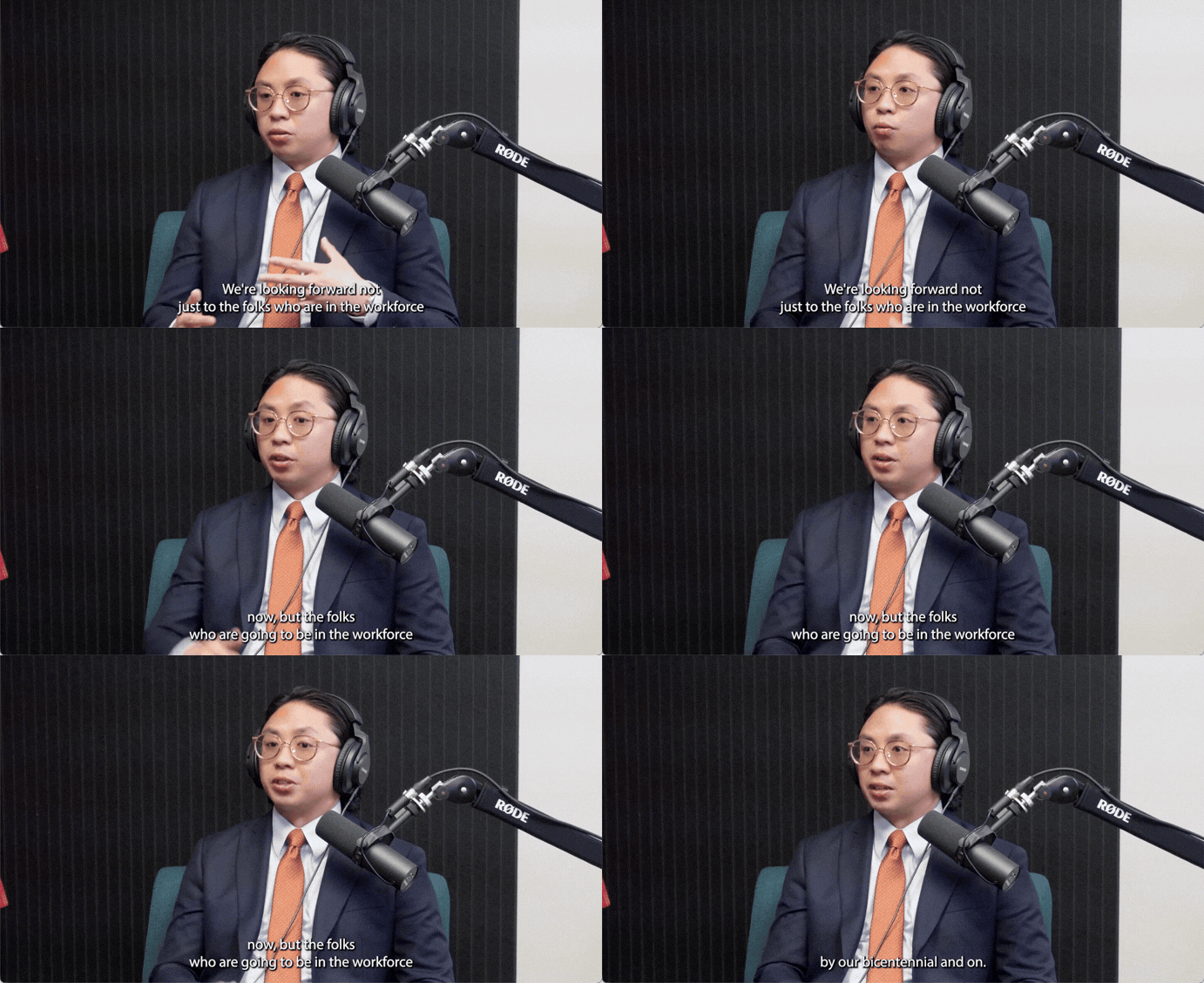
Texas 2036 is advancing a multi-year effort to strengthen the state’s classroom-to-career pipeline, including reforms to community college funding and the state’s school accountability system.
The goal is to better align education with workforce needs by:
- supporting and refining outcomes-based funding for Texas community colleges that prioritizes credentials with demonstrated value in the workforce.
- identifying the pathways for students that best indicate success in either college, career or military service.
- improving workforce data collected by the Texas Workforce Commission to understand in better detail the jobs and skills needed by employers in every region of the state.
Is Texas preparing the next generation fast enough for the jobs being created today?
What changes do you think Texas should prioritize to prepare the workforce of the future? Tell us your thoughts.
Through the Future of Texas podcast series, Texas 2036 brings together diverse perspectives as we explore the opportunities and challenges facing our state over the next ten years. The views expressed in this program are those of the individual speakers and do not necessarily reflect the views of Texas 2036, its staff or its Board of Directors.