
One Year After Texas Floods: What’s Next For Water?
This is a preview of our Texas 2036 newsletter providing a look at floods and droughts in Texas. To receive this weekly look at our work, sign up here.
A Year After Texas Floods
Almost one year ago, many Texas communities were recovering from devastating floods. Today, much of the state is focused on another challenge: securing enough water to support a growing population and economy.
A Texas meteorologist wrote nearly 100 years ago that the state is “the land of perennial drought, broken by the occasional devastating flood.” That paradox is playing out right now.
We must prepare for floods when they come and ensure reliable water supplies when rain doesn’t. That’s why water has become one of the most important long-term policy issues facing our state.
By 2080, Texas Needs $174B for Water Supply
Sources: 2002, 2007, 2012, 2017, 2022, and draft 2027 state water plans.
Voters have invested significantly in water, but Texas still faces big water challenges in the decades ahead due to our growing population and economy, aging water infrastructure and the time required to build new supplies.
This year, the Texas Water Development Board released its draft 2027 State Water Plan recommending nearly $174 billion in water supply investments through 2080.
Once finalized, the plan will serve as a blueprint for building the water infrastructure projects needed for a growing, drought-prone state.
Policy Spotlight: Growing Water Funding Needs
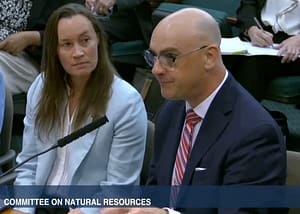
On June 23, Texas 2036 Director of Infrastructure and Natural Resources Policy Jeremy Mazur testified before the House Natural Resources Committee on Texas’ long-term water needs.

Policy Expert Jeremy Mazur Talks Water Future
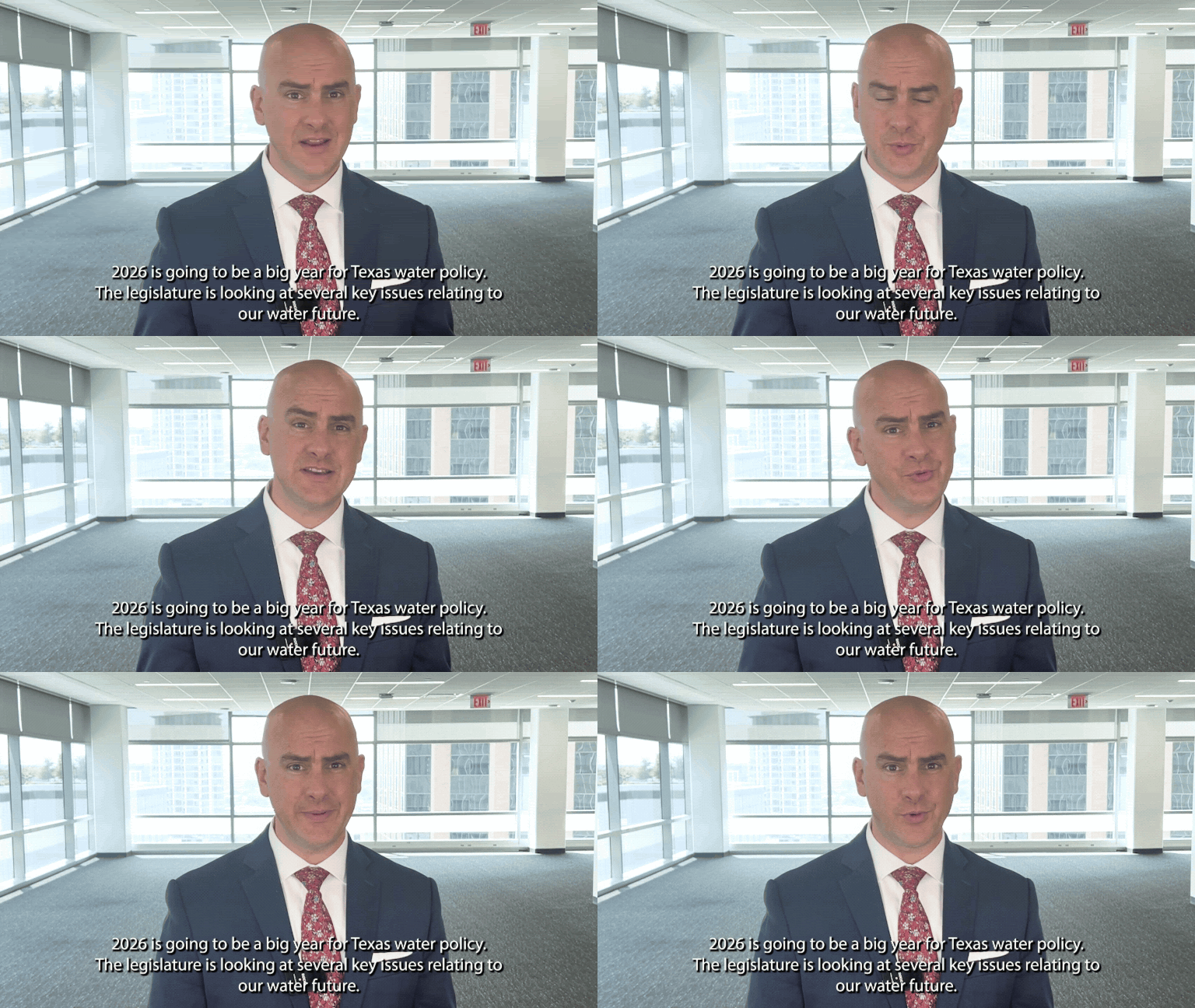
Jeremy leads our work on water, energy, resilience and infrastructure policy.
His research and advocacy has helped shape statewide conversations about water planning, flood resilience, infrastructure investment and innovative solutions to meet Texas’ future needs.
Want to learn more about his work? Check our guide to Texas water
Despite Rain, Most of Texas Faces Drought
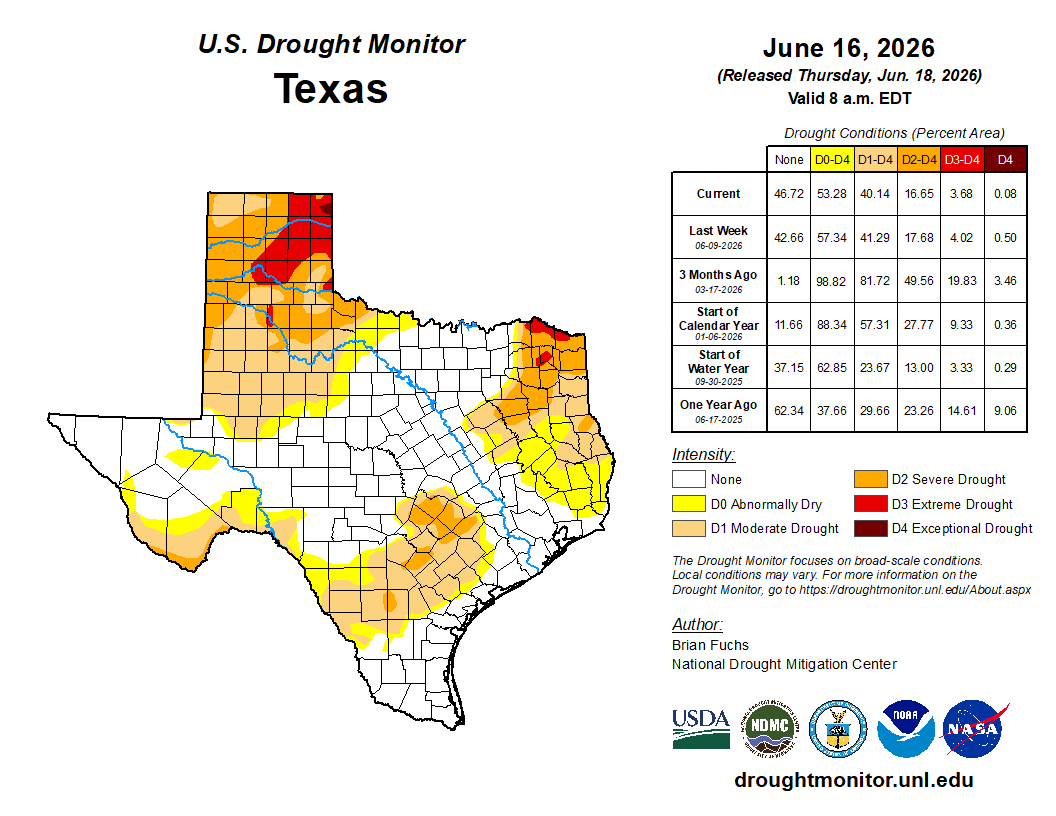
 You might be surprised to learn that despite all the June rains that fell in many parts of our state, major drought still afflicts large areas of Texas.
On the Ground: Communities Running Low

South Texas communities are facing difficult choices as drought strains local water supplies.
In the Corpus Christi region:
- Officials are debating how to support major industrial and port expansion while water supplies remain tight.
- Nearby communities like Alice and Beeville have turned to emergency well-drilling.
- Heavy groundwater pumping could deplete local aquifers faster than they recharge.
Why it matters: Public water systems must report to the state when supplies fall below 180 days, triggering heightened drought oversight.
The proposed $174 billion State Water Plan is designed to help communities avoid reaching that point.
 Coming Soon: Texas 2036 has been performing a deep-dive on the state and regional water plans published before the current water crisis in the Coastal Bend to understand how they anticipated this crisis, and what they recommended to improve drought resilience.
Remembering the Hill Country Floods
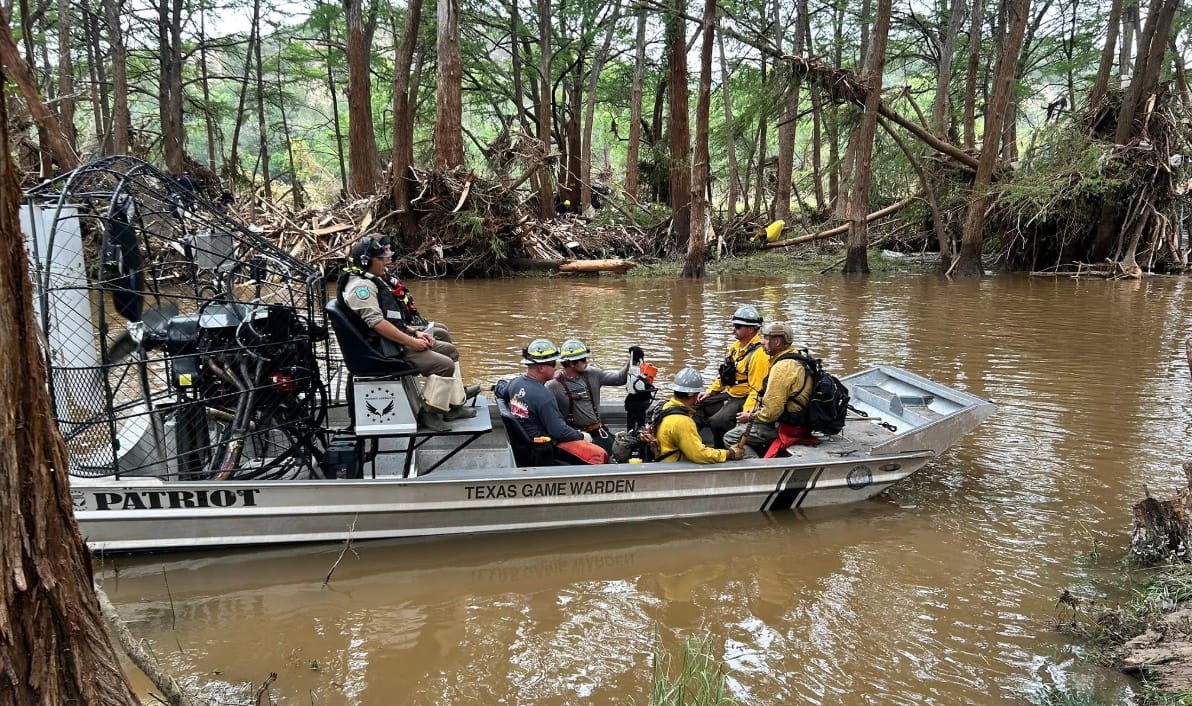
Texas A&M Forest Service sawyers ride with game warden and search and rescue team on the Guadalupe River in Kerr County. (Credit: Texas A&M Forest Service)
One year ago, the Hill Country Floods delivered another painful reminder of these sobering statistics:
- Texas leads the nation in flood-related deaths.
- Nearly one in six Texans lives or works in a known flood area.
- More than 1.6 million Texas buildings, including schools, hospitals, and public safety facilities, sit in a 100-year or 500-year flood zone.
The 89th Legislature took meaningful steps forward. Lawmakers approved significant funding that may be used for flood resilience projects, along with improvements to the state’s flood warning and response capacity.
The work of implementation is underway.
Texas 2036 has been tracking the lessons from other states, including Florida and North Carolina, on how to move faster and smarter on flood resilience.
Coordinated watershed approaches, strong state leadership, and robust local technical assistance are consistently the difference between states that recover well and those that don’t.
Further Reading: Lessons in Flood Resilience
What We’re Watching Ahead of 2027 Session
The infrastructure gap is widening, and we’re putting numbers on what closing it will actually take. The Legislature may be between sessions, but policy doesn’t pause.
Right now, we’re paying close attention to:
- Regional planning and long-term supply projections
- Long-term capacity of state financial assistance programs
- Dedicated funding to the Texas Water Fund and associated oversight
We will continue to provide the data and analysis needed to make those decisions well. A growing Texas depends on planning for water — both the beneficial kind you store for dry years, and the destructive kind you prepare for.

“Although Proposition 4 gave our funding programs a needed boost, we can’t afford to waste a single dollar, and must make sure that our water plans deliver high-priority projects with regional benefits.”
– Jeremy B. Mazur, Texas 2036 Director of Infrastructure and Natural Resources Policy
Tell Us Your Water Story
From drought preparedness and conservation efforts to flood resilience and infrastructure needs, communities across Texas are experiencing these issues differently. Share your perspective with us.