
Your guide to what happens between TxLege sessions
This is a preview of our Texas 2036 newsletter with your guide to the legislative interim and what happens between TxLege sessions. To receive this weekly look at our work, sign up here.
What really happens between legislative sessions

Most Texans think the Legislature only gets busy every two years. Here’s the truth: the 18 months between sessions is where the next session is built.
This interim year is when lawmakers gather research, hold hearings, travel their districts, investigate problems, direct agencies and begin sketching out the bills for 2027.
🧭 We’re here to guide you through the interim
It might seem quieter this year, but decisions made now can reshape programs and set the agenda long before the next gavel drops.
Texas 2036 is here to guide you through what matters this interim and spotlight the issues we’re engaging on so you can stay ahead of the decisions shaping Texas’ future.
Your 2026 interim timeline 🗓️
The interim is a structured year of hearings, reports, elections, budget work and oversight. All of it will shape what lawmakers will debate when they return in 2027. Here’s what unfolds and when.
January–March 2026:
Priority 2027 issues begin to emerge

This year’s legislative work will begin in earnest when Lt. Gov. Dan Patrick and Speaker Dustin Burrows issue interim charges, telling committees what to study and prepare for the next session. From there:
- Committees map hearings and request data and stakeholder input that will frame future debates.
- State agencies continue implementing 2025 laws, translating statutes into rules that turn legislative direction into agency action.
- Budget staff monitor funds being spent during the current biennial budget cycle, while also making early assessments of 2027 funding needs.
At the same time, Texans will vote in the March 3 primary election (early voting starts Feb. 17). Primary campaigns tend to put a spotlight on the issues lawmakers will feel pressure to act on later — often setting the tone for the next session before the interim is half over.
This is when the 2027 agenda starts to come together.
April–July 2026:
Hearings, reports and rulemaking create a record
As the interim moves into full swing:
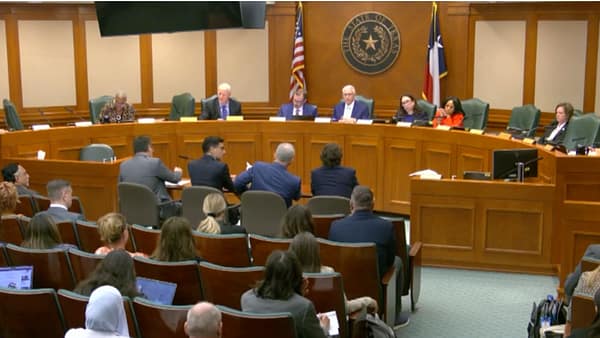
- Committees hold public hearings, shaping the official record lawmakers will rely on in 2027.
- Agencies adopt rules, finalize timelines and report on progress.
- The Sunset Advisory Commission reviews agencies up for renewal in 2027, recommending reforms that frequently become must-pass legislation.
- Appropriations leaders track revenue and cost pressures, quietly determining which future strategies should be prioritized within available funds.
Behind the scenes, stakeholders begin drafting legislative proposals. In their work, they are often responding to what the data, hearings and the budget suggest will survive the legislative process.
By summer’s end, the window for major policy reforms is beginning to shrink.
August–December 2026:
Issues with momentum move forward

The final months of the interim capture the moments when analysis becomes architecture.
Legislative work intensifies:
- Committees release interim reports in November or December. These documents shape bill language, oversight priorities and budget decisions for the next session.
- Agencies submit and present Legislative Appropriations Requests (LARs) to budget writers, formalizing their funding needs and policy assumptions.
- Budget writers begin their early drafts after October, well before the public sees a proposed budget.
- On Nov. 9, bill pre-filing opens. Legislators begin transitioning interim ideas into firm legislative proposals.
Meanwhile, election season comes to a conclusion (early voting starts Oct. 19; Election Day is Nov. 3):
- Campaigns elevate issues that soon become legislation.
- Debates sharpen around education, water, energy, workforce, infrastructure, health care and taxes.
- Texans elect the lawmakers who will govern in 2027 — decisions that directly shape leadership roles and committee assignments.
Why the interim matters more than you think

What happens in the interim may not grab headlines, but it’s one of the most influential periods in Texas government. Decisions made now shape what lawmakers prioritize, what programs move forward, and what funding gets protected or redirected.
Here’s why the interim matters:
- It sets the agenda. Interim hearings and interim charges can determine which issues rise to the top in the next session.
- It moves money. Agency updates and budget reviews can shape how billions of dollars may be spent in the coming session.
- It tests ideas. Policy concepts get vetted, challenged and refined long before they ever show up in bill form.
- It highlights problems early. Interim reports and Sunset reviews can identify gaps or challenges faced by programs that need attention.
- It shapes public debate. Elections during even-numbered years give voters a chance to influence priorities and leadership.
By the end of this year, Sunset Advisory Commission findings, interim reports, state expenses and budgets, and key stakeholder legislative agendas mean that many of the biggest decisions framing the legislative session will already be in motion.
Sunset Review: How state agencies are evaluated and potentially overhauled

If the interim has a single pressure point where oversight turns into law, Sunset is it.
Every interim, a powerful review process unfolds for a set of state agencies: Sunset review. For decades, this is how Texas examines whether state agencies are still working as intended, or need reform. And, historically, Sunset has made some of the biggest changes in Texas government to ensure it is efficient, effective and necessary.
Why Sunset matters
Sunset review is not just oversight; it can reshape entire agencies. In past cycles, Sunset has:
- Merged multiple agencies into the Health and Human Services Commission (HHSC).
- Reorganized the Department of Family and Protective Services (DFPS) after findings on child welfare challenges.
- Strengthened accountability for agencies like the Texas Commission on Law Enforcement and Texas Department of Criminal Justice.
Sunset bills are often “must-pass,” which means they become powerful vehicles for legislative action.

What happens this year
In 2026, the Sunset Commission will hold hearings, release reports and recommendations for 16 agencies and programs that touch millions of Texans.
The process will include the following actions:
- Sunset begins a process of research and analysis, interacting with agencies under review to gather information from them while also receiving input from stakeholders.
- Sunset evaluates the information they’ve gathered, developing recommendations that will become their first staff report.
- In a series of public hearings, the Sunset Advisory Commission considers Sunset staff recommendations, the reviewed agency’s response as well as any public testimony and written comments received during this period.
The commission then votes to approve final recommendations that will become the basis of the Sunset bill that will be considered by the Legislature.
Writing the budget is a year-round activity

If Sunset reshapes agencies, the budget determines which strategies will be financially prioritized.
Texas is a big state, and our state’s two-year budget reflects it. The General Appropriations Act went into effect Sept. 1, 2025, and runs through Aug. 31, 2027. It authorizes roughly $338 billion in total spending, including about $177 billion in General-Revenue-related funds. These dollars support public education, health care, transportation, public safety, higher education, water and workforce programs across Texas.
The budget’s size and complexity means that work on this foundational document is not limited to the legislative session. In fact, it is a continuous, year-round process that fills the 18 months between regular legislative sessions.
What budget writers are doing in 2026
- Agencies map their strategies for the next two years and outline performance measures.
- Late spring–early summer: agencies prepare their Legislative Appropriations Requests (LARs), formal documents explaining what funding they need and why.
- Late summer–fall: the Legislative Budget Board, the Governor’s Office and senior budget staff hold joint hearings to review agency LARs.
- Fall–winter: budget writers work with the LBB to assemble the initial draft of the 2028–29 biennial budget, which will be among the first major bills filed next session.
What to watch next
Budget writers will look to the Texas Comptroller for any revisions to the certification revenue estimate, which sets how much money is available for the current 2026–27 cycle.
Any change in that estimate up or down can shape what expands, what gets adjusted and what lawmakers will debate when they reconvene in 2027.
What Texas 2036 is doing during the interim

While primary and general elections unfold and state agencies move through the interim, Texas 2036 is focused on the work that gives lawmakers the best nonpartisan data and the most effective policy solutions to consider turning into legislation.
Our role is to bring rigor, clarity, long-term thinking and accountability to the process.
Here’s where we’re concentrated in 2026:
- Tracking interim charges and hearings across education, health, workforce, water, energy and public safety
- Providing data and analysis to legislators, staff and business leaders
- Monitoring agency rulemaking to ensure new laws passed in 2025 are implemented effectively
- Engaging deeply in Sunset reviews, especially for the Texas Workforce Commission
- Preparing significant new research and reports that will shape 2027 debates
- Building bipartisan coalitions around long-term statewide challenges
- Expanding tools and updates to help Texans understand what’s at stake
Next week’s newsletter will break down these priorities in more detail, including the specific issues we’re focused on and where Texans can expect new insights from our team.
Tell us what you’re thinking
Which issues, policies or state actions matter most to you this year? Which ones should we be watching?