
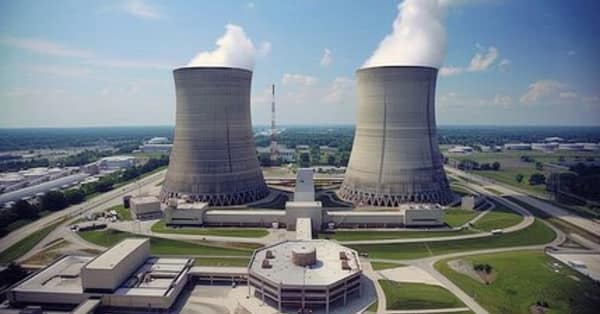
Nuclear fission — the splitting of atoms to release heat and drive a chain reaction — is as fascinating as it is powerful. Today, nuclear power plants provide 20% of total U.S. electricity. Nuclear power continues to play a critical role in Texas’ “all of the above and below” energy portfolio, supplying nearly a tenth of ERCOT’s daily energy mix in the form of reliable baseload electricity for the state’s grid.
U.S. nuclear power generation was largely energized pre-1990s
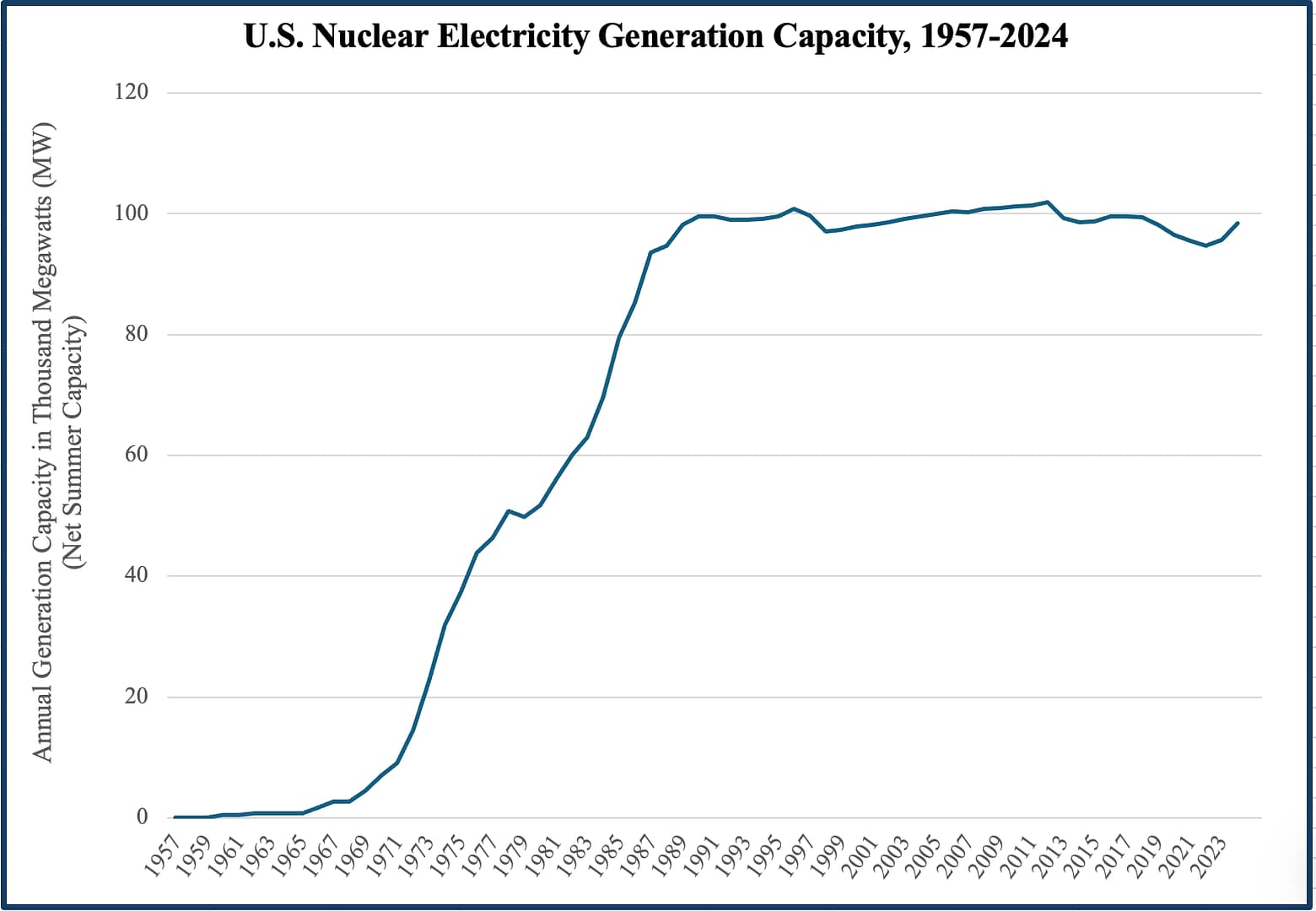
The Cold War era energized nuclear power generation, as depicted in U.S. Nuclear Electricity Generation Capacity, 1957-2024. The geopolitical catalyst of nuclear weapons development during World War II spurred massive investment in the U.S. throughout the 1950s, 1960s and 1970s in atomic energy.
Despite now operating the world’s largest nuclear power fleet, the U.S. reached present-day capacity levels in the late 1980s, and has not significantly grown its nuclear power production since. Following the Three Mile Island incident in 1979, 67 planned projects were canceled due to growing costs and timelines. While the Vogtle site in Georgia was expanded in 2024, and is now the largest nuclear site in the U.S., no other reactors approaching its size are currently under construction in the country.
Source: U.S. Energy Information Administration (EIA); EIA Monthly Energy Review – Nuclear and Electric Power Monthly, Accessed June 2026
Nuclear power generation is largely flat across Texas and the U.S.
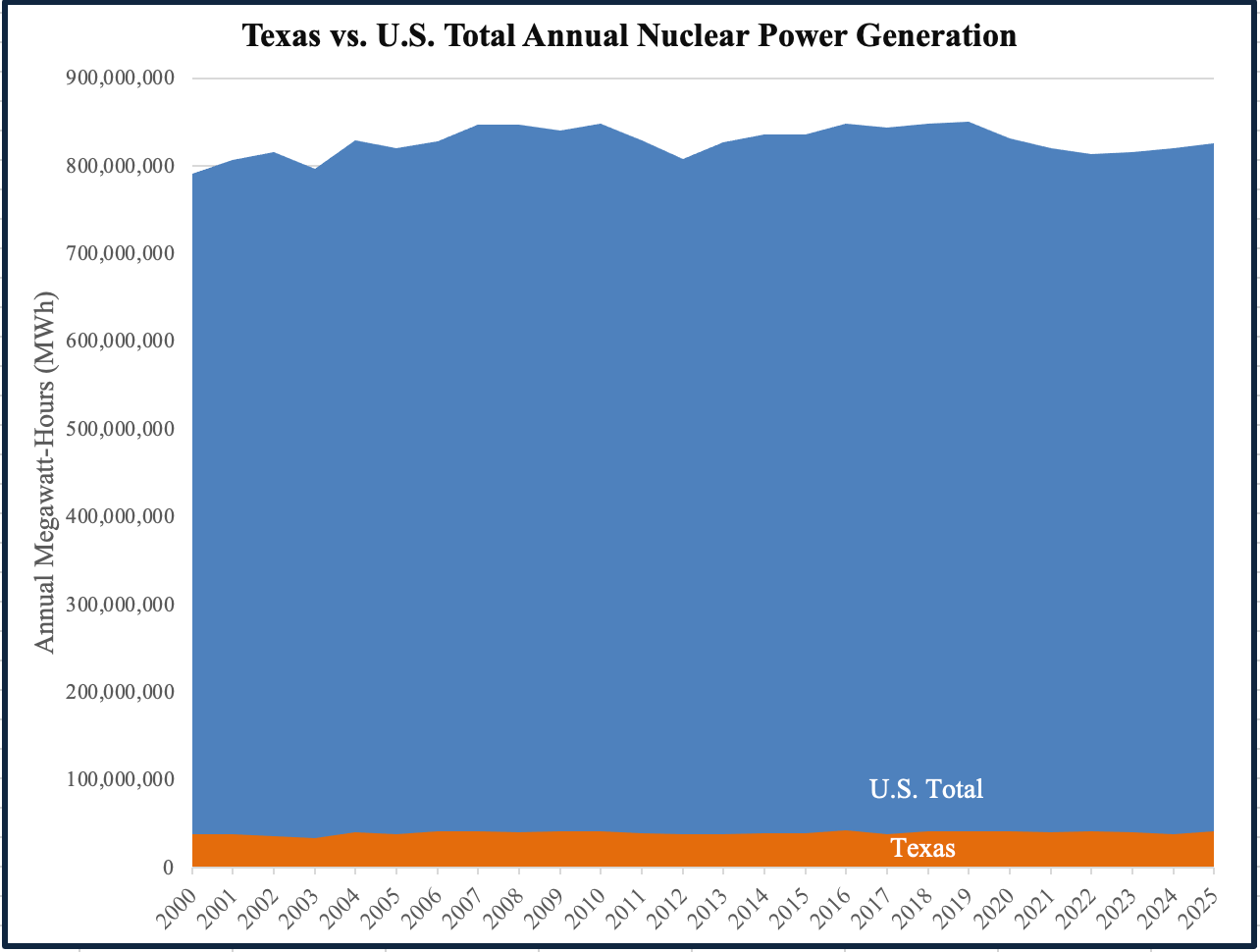
Over the past 25 years, as shown in Texas vs. U.S. Total Annual Nuclear Power Generation, Texas has mirrored the national trendline of flat and stable nuclear generation numbers. Texas hosts two nuclear power plants: South Texas Project Electric Generating Station (STP) near Bay City in Matagorda County and Comanche Peak Nuclear Power Plant, near Glen Rose in Somervell County.
These two always-on plants have consistently contributed approximately 5% of overall U.S. nuclear power generation for more than 25 years. And these two power plants currently account for 8% of ERCOT’s daily generation mix to fuel our electrical grid.
Source: EIA Monthly Energy Review – Nuclear and State-by-State Generation
Texas ranks seventh in the U.S. for nuclear generation
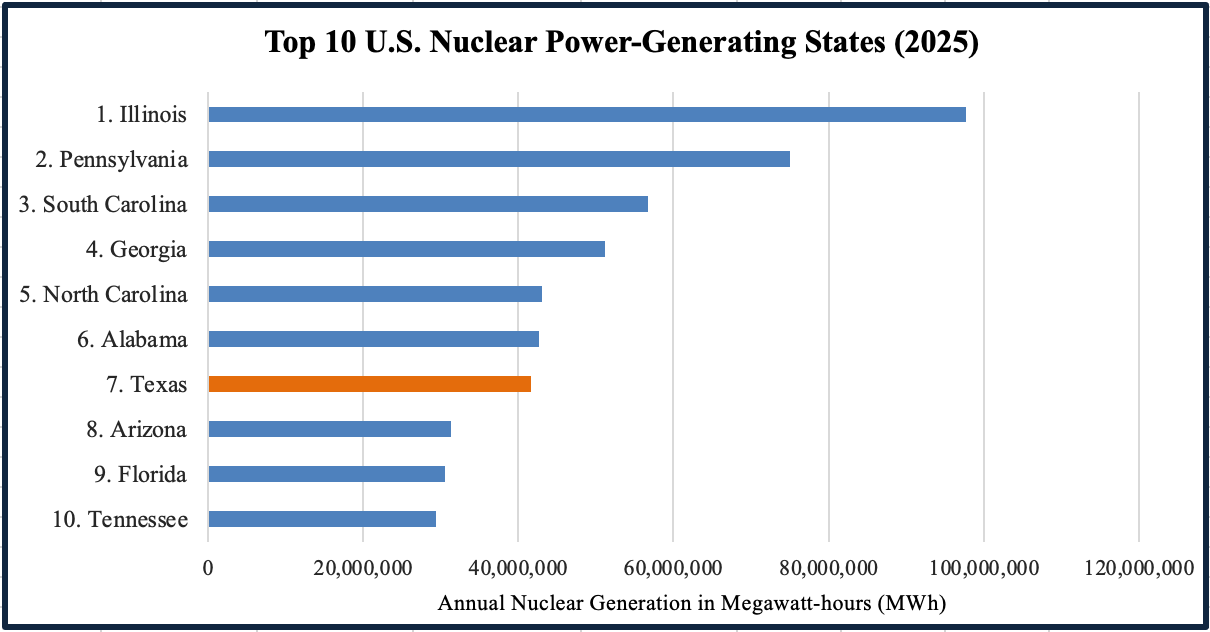
With our two plants, Texas currently ranks seventh in the nation for nuclear power generation, depicted in Top 10 U.S. Nuclear States by 2025 Generation. Georgia boasts the newest reactor and largest nuclear plant in the nation (Vogtle), with massive additions that came online between 2023 and 2024. That investment catapulted Georgia’s standing in the Top 10 from seventh to fourth in the nation in just one year.
Source: EIA Nuclear Generation by State
Can Texas lead the nation’s nuclear renaissance?
Other than Georgia’s recent jump, the Top 10 nuclear power-producing states have largely remained flat in terms of capacity growth over the past 25 years. For nuclear to grow, there will need to be clear-eyed investment in this expensive but powerful form of baseload power. Cost remains a hurdle; upfront investment is higher than solar, wind or gas, and plant construction involves longer lead-times.
But Texas lawmakers recognized the potential of nuclear energy in the 89th legislative session. HB 14 created the Texas Advanced Nuclear Energy Office as well as the Texas Advanced Nuclear Development Fund. The goal of these efforts is to get nuclear projects to market faster by easing capital costs as well as streamlining the permitting process.
With the promise of renewed public interest in nuclear power, technological advances in small modular reactors (SMRs) and microreactors offer benefits like reduced construction time, cost and physical footprints.
Last year, the U.S. Department of Energy announced the “Reactor Pilot Program” to develop advanced nuclear reactors. At least three of these pilot projects aiming to deploy advanced nuclear at commercial scale are based in Texas, signaling that the state could be on the verge of a nuclear renaissance.