
How will Texas families change in 10 years?
This is a preview of our Texas 2036 newsletter launching the sixth episode of our Future of Texas podcast with our guest, Mattie Parker, on the future of Texas families. To receive this weekly look at our work, sign up here.
Episode 6: The Future of Raising A Family

(Left to right) Host Brad Swail talks with Fort Worth Mayor Mattie Parker and A.J. Rodriguez in episode six of the “Future of Texas” podcast series.
Nearly 388,000 babies are born in Texas each year, about one every 81 seconds, according to the latest data.
Every day, families are choosing Texas as the place to build their future. When planning for a family, housing, childcare, health care and education are among the factors they consider.
The Future of Texas series continues with Texas families.
Our Podcast Guest: Mayor Mattie Parker
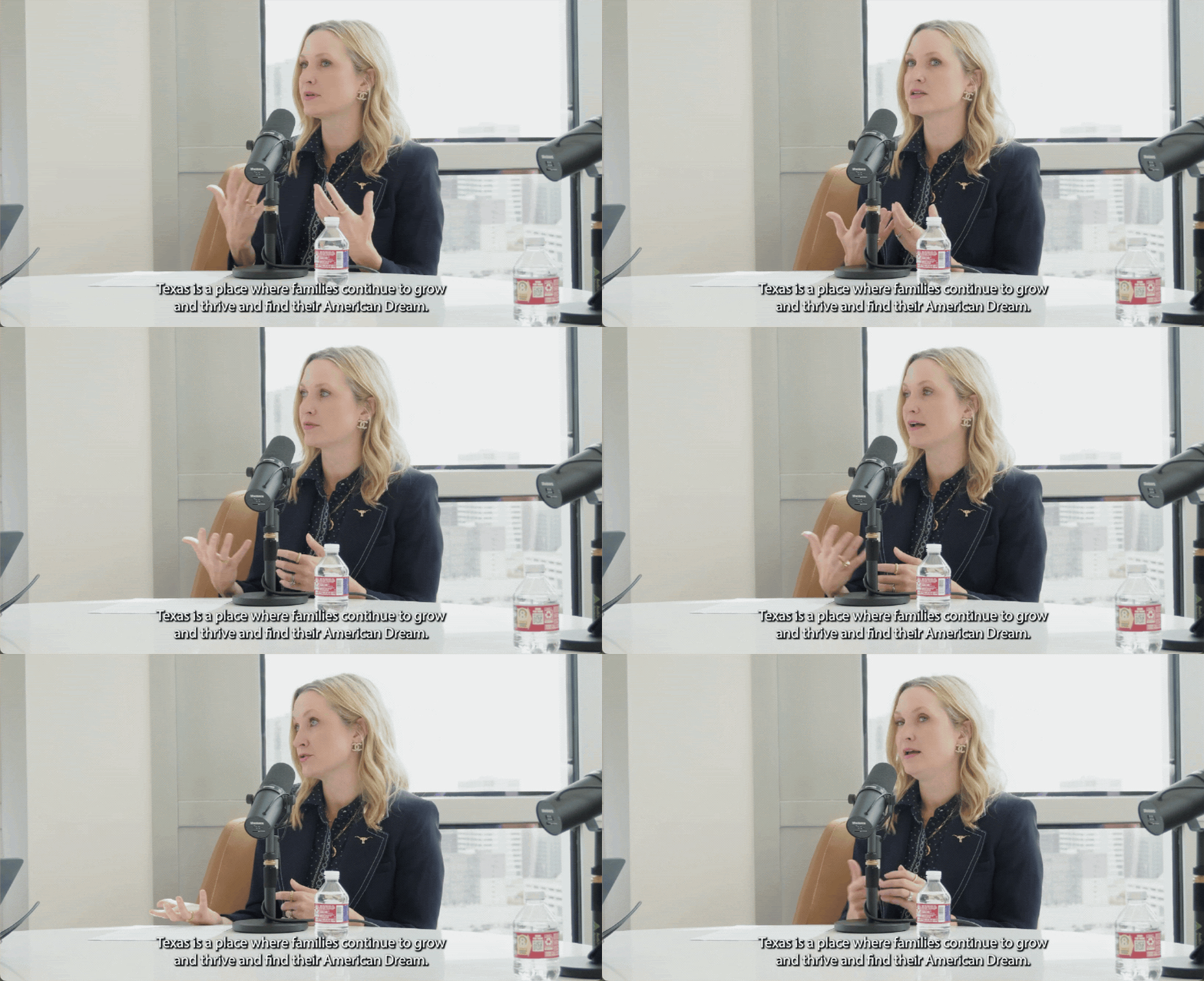
Fort Worth Mayor Mattie Parker joins Texas 2036’s A.J. Rodriguez for a conversation on how one of the nation’s fastest-growing cities is working to keep the fundamentals strong for families as it grows.
From maternal health to housing to education pathways, they explore what it takes to turn growth into real opportunity and how local and state leaders can work together to get it right.
📺 Watch the full episode on YouTube
🎙️Listen on Spotify or Apple Podcast
By the Numbers: Texas Families

Children and families play a central role in Texas’ population today, reflecting the scale of the state’s next generation.
- 7.7 million children live here* – about one in four residents.
- One in three households* include children under 18.
- Gen Z and Gen Alpha already make up 37% of the state’s population.
*U.S. Census Bureau, Population Division: Annual Estimates of the Resident Population for Selected Age Groups by Sex for Texas, April 1, 2020 to July 1, 2024. Released June 2025.
From Baby Boom to Baby Pause

More Texans are waiting longer to start families, and fewer births are occurring among younger women.
- The median age at first birth in Texas has risen from 22 to 27 from 1960 to 2023.
- Birth rates have declined roughly 23% since 2007, from 79 births per 1,000 women of childbearing age to 60.6 in 2023.
- Nationwide, fertility rates are falling. Texas, however, remains above the national average at 1.84 compared to 1.66, with a slight uptick following the pandemic.
Double the Price Tag: Raising a Child in Texas

The cost of raising a child has more than doubled in 25 years. Today, it costs more than $320,000* to raise a child to age 17. At the same time, the median annual income for Texas families is about $96,000 a year. *Estimate based on 2017 U.S. Department of Agriculture data, adjusted to 2025 dollars using Bureau of Labor Statistics Consumer Price Index.
For families earning less than the median wage, the cost of raising a child can be challenging. At the same time, Texas remains one of the more affordable states to raise a child, ranking as the 7th least expensive, according to the MIT Living Wage Calculator.

👶 Childcare: Center-based childcare for toddlers in Texas is an average of $10,921 per year, which is about $911 a month. This level of cost can add up quickly for families, especially those using full-time center-based care. (ChildCare Aware of America (2024); income context from U.S. Census Bureau American Community Survey.)
🏠 Housing: Home prices have risen roughly 40% between 2019 and 2023, with the statewide median hitting approximately $333,800 by early 2026. That’s making it more difficult for many young families to enter homeownership, and in some cases contributing to delays.
🩺 Health Care: The total premium for employer-sponsored family coverage averaged nearly $27,000 in 2025, about one-third of the median household income in Texas. Even among those with coverage, over half of insured Texans report skipping care because of prices.
“What keeps coming up is affordability in some shape or form. … That’s the first thing that corporations ask about when they’re relocating [to Texas]. Number one, can I get the workforce? Number two, do they have an affordable place to live? Those are the kinds of issues that we’re hearing statewide.”
– A.J. Rodriguez, Texas 2036
Maternal Health: The Cost Begins Before Birth

Maternal health plays a critical role in helping both mothers and babies get a strong start. The state’s maternal health data reveal a system under strain, and gaps within it.
A 2024 report found that many pregnancy-related deaths in Texas had at least some opportunity for prevention.
What we’re doing to help: Texas 2036 was proud to be one of more than 160 groups supporting legislation passed in 2023 to extend Medicaid eligibility for pregnant women from two months to 12 months postpartum.
Did you know? Expecting mothers in Tarrant and Dallas counties can get free iron supplements at prenatal visits through the North Texas Maternal Health Accelerator — helping prevent anemia and postpartum complications.
“I want us to be the state — and the city — that takes better care of our moms and babies than anywhere else in the world.” – Mayor Mattie Parker
Preparing Children For Life After High School

Texas families want their children to thrive. And as the state approaches its bicentennial, the path from high school to a family-sustaining career has never mattered more.
The good news: Texas has more pathways than ever. The right credential, not just a four-year degree, can open the door to a good-paying, in-demand job. Community colleges, workforce certifications and apprenticeships are increasingly competitive options for young Texans ready to build a future on their own timeline.
Here’s a look at the average cost of higher education:
- Public four-year institution (in-state, on-campus): $24,083
- Private four-year university: $56,908
- Public two-year, commuter (off-campus, living with family): $10,199
Source: NCES, latest available data (2022–2023)
What Texas 2036 Is Watching
At Texas 2036, we’re focused on the decisions that will determine whether families can build stable, thriving lives here:
- Education and Workforce: Ensuring Texas high school students graduate with a credential of value or prepared for college without remediation.
- Childcare: Expanding access and affordability while modernizing a fragmented system that isn’t keeping up with today’s workforce.
- Housing: Increasing supply and flexibility so families can find affordable homes in the communities where they want to live and work.
- Health Care: Improving coverage, lowering costs, and pushing for more transparent and competitive markets that work for families.