How Texas prepares the next generation
This is a preview of our Texas 2036 newsletter launching the second episode of our Future of Texas podcast with our guest, Mike Morath, on preparing the next generation of Texans. To receive this weekly look at our work, sign up here.
Episode 2: Educating Tomorrow’s Texas

(Left to right) Host Brad Swail talks with Texas Commissioner of Education Mike Morath and Director of Education and Workforce Policy for Texas 2036 Mary Lynn Pruneda in episode two of the “Future of Texas” podcast series.
One in 10 American children live in Texas.
That means the future of the United States is being shaped in Texas classrooms right now.
As Texas continues to grow, the performance of our K-12 system will play a defining role in whether that growth translates into opportunity for all Texans.
The Future of Texas series continues with the future of education in Texas.
This Week’s Podcast Guest: Mike Morath
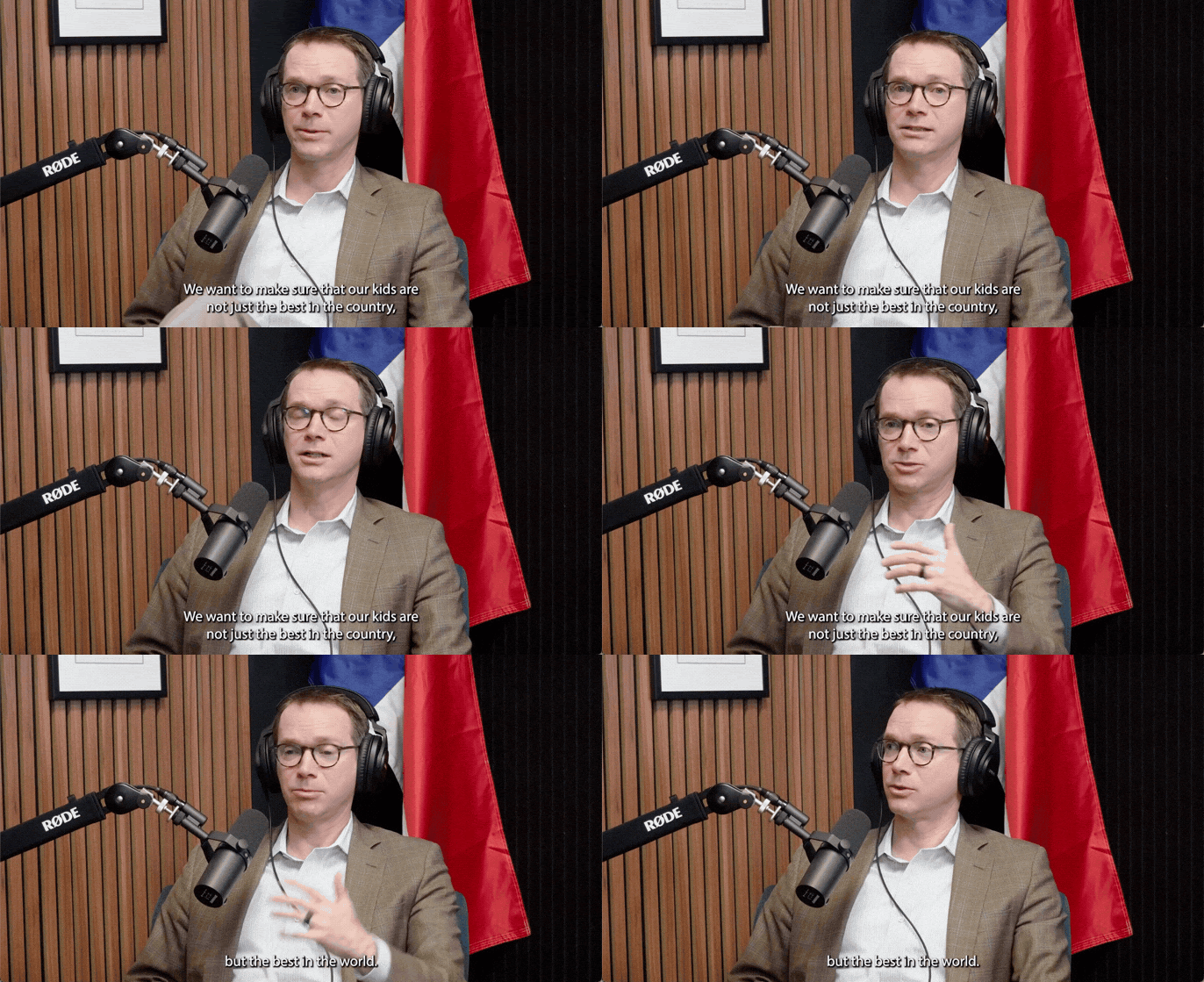
Texas Commissioner of Education Mike Morath is joined by Texas 2036’s Mary Lynn Pruneda to discuss how Texas is innovating to ensure all Texas students are equipped with the knowledge and skills necessary to succeed in life.
“We want every child, five and a half million souls in Texas public schools, to be supported to achieve their God-given potential,” Morath said in this week’s episode.
📺 Watch the full episode on YouTube
🎙️ Listen on Spotify or Apple Podcast
Where Texas Stands Today
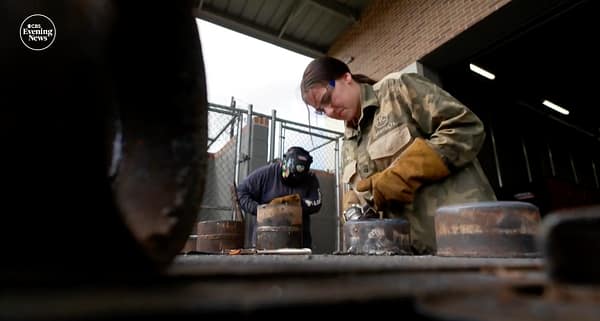
Source: CBS Evening News, Rural Innovation in South Texas
Through both sheer numbers and a commitment to innovation, Texas’ education system plays an outsized role in shaping the future workforce of both the state and the nation.
1. Texas educates one of the largest student populations in the country.
 Texas public schools serve about 5.5 million students and graduate nearly 400,000 students each year, trailing just California in both metrics. Researchers at Texas A&M project that Texas will overtake California as the highest producer of high school graduates by 2033.
2. Major new investments are strengthening public schools.
 In the 2025 session, lawmakers directed more than $8 billion in new funding toward public education. That included:
- Record investments in teacher compensation
- Certification incentives
- Tutoring
- High-quality instructional materials
3. Career-connected learning has expanded dramatically across Texas high schools.
 As of the 2023-24 school year, nearly 1.2 million Texas high school students were classified as Career and Technical Education concentrators, meaning they had completed and passed two or more high school CTE courses within the same program of study.
Following this CTE pathway allows many students to graduate with college credit, industry certifications or technical skills already underway.
Academic Performance is Under Pressure
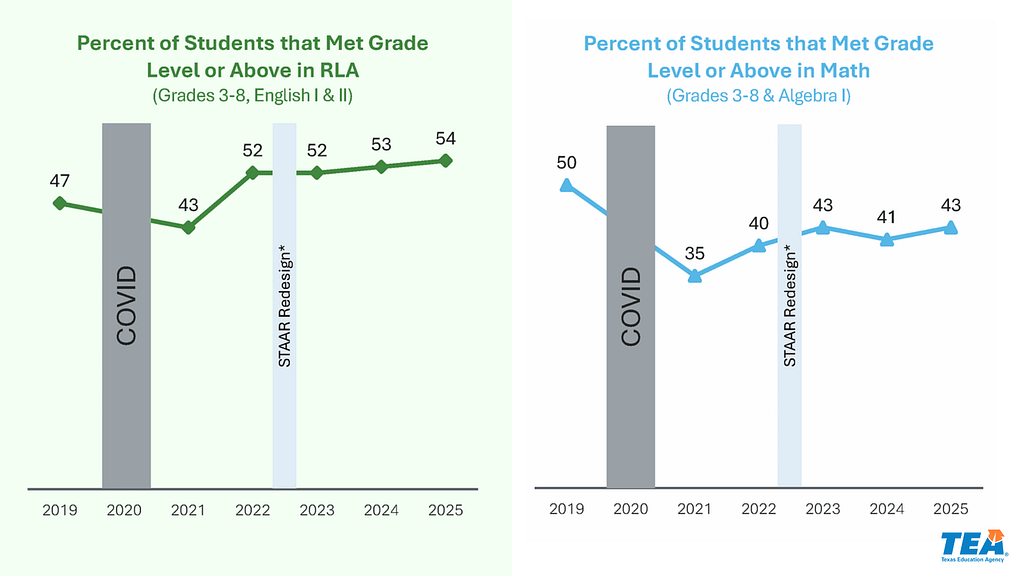
*In 2023, the STAAR test was redesigned to better align with classroom instruction, which necessitated re-setting of standards and scales from 2022 to 2023. (Texas Education Agency, 2025 STAAR Exam Results)
The COVID-19 pandemic disrupted learning for many Texas students and led to a sharp decline in STAAR exam performance. While students have made some progress in recent years, results, especially in math, remain below pre-pandemic levels.
- Reading: Scores rose by 1 percentage point, with 54% of students meeting grade level, a record high. Still, 46% of students did not meet grade level.
- Math: 43% of students met grade level, up 2 points from last year. This remains below pre-pandemic levels, when 50% of students were on track.
In August, the Texas Education Agency announced notable gains in A–F accountability ratings for public schools and districts statewide, with strong year-over-year improvements in both campus and district performance.
 “Ensuring that our students are educated …is the best way to prepare them for a future that is dynamic, that requires them to think and wrestle with great ideas.”
Mike Morath, TEA Commissioner
Enrollment Trends are Under Pressure
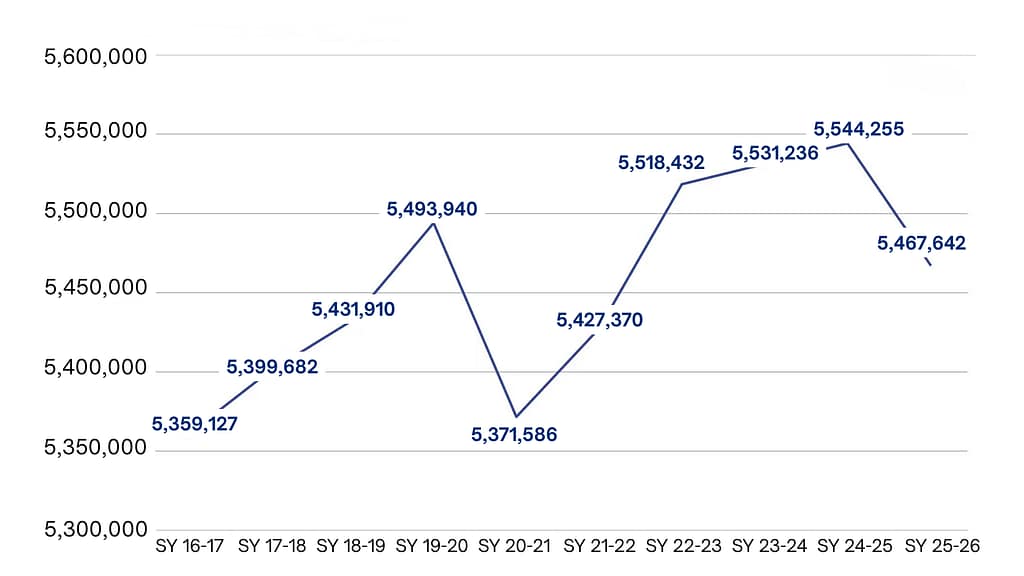
Ten Years of Texas Public School Enrollment
Source: TEA, Student Enrollment Reports
For the first time since the pandemic, overall student enrollment declined year over year. In the 2025-26 school year, fewer than 5.5 million students were enrolled in Texas public schools, which is a 1.4% decline from the previous school year.
The drop was driven largely by losses among Hispanic students and children in the earliest grades. Together, these trends point to a future of smaller school populations and growing pressure on districts to adapt.
Preparing for the Classrooms of the Future

Artificial intelligence and new learning technology have the potential to reshape classrooms.
As new technologies emerge, it is essential that instruction continues to meet strong learning standards, ensuring students build foundational skills in reading and math while remaining safe in the classroom.
Three Big Questions: Future of K-12 Education

The performance of the state’s public school systems will be a key factor in sustaining Texas’ tremendous economic growth.
To keep Texas on a forward-moving economic path, the state will need to answer three critical questions:
1. Will Texas ensure that educating one in 10 American children means preparing them for opportunity, not just graduation?

By law, Texas graduates now must have the skills to enter the workforce or pursue college without the need for remediation.
The goals set by the 2025 Texas Legislature include:
- Career readiness for all: Graduates will leave high school with the skills and credentials needed to enter the Texas workforce immediately.
- Postsecondary readiness: Graduates who choose to attend college will be prepared for college-level work without needing remediation.
2. Will Texas use accountability as a catalyst for improvement?

Clear, transparent data can highlight where students need additional support and where effective strategies are already producing results. When paired with targeted resources and strong leadership, accountability can become a tool for continuous improvement across the system.
3. Will Texas make high school more valuable for every student, regardless of ZIP code or pathway?
Source: Texas Education Agency (Career and Technical Education)
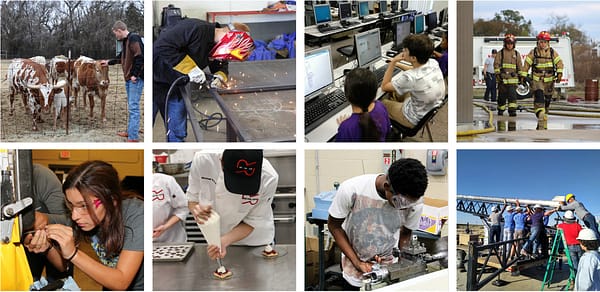
High schools must connect learning to real opportunities. Expanding access to dual credit, career and technical education and other career-aligned programs can help students graduate with skills, credentials or college credit already in hand.
What do you think Texas students will need to succeed over the next decade?
You heard from us, but now we want to hear from you.
Did we miss anything? What questions do you think matter most for the next decade in Texas schools? Tell us your thoughts.