

Note: This is Part 1 of a series on Texas 2036’s Earned but Not Awarded report
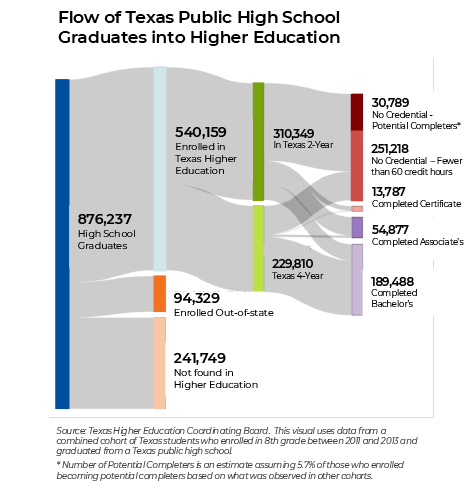 As the number of jobs requiring only a high school diploma continues to diminish, postsecondary degrees or credentials have become essential for securing stable, high-wage employment.
Yet, while more than 90 percent of Texas high school students now graduate from high school, only one in three completes a postsecondary credential within six years. This gap threatens both individual opportunity and the state’s long-term competitiveness.
Recognizing this, Texas leaders set a bold target through the Building a Talent Strong Texas Plan: by 2030, 60 percent of Texans ages 25–64 will hold a degree, certificate or credential of value. Achieving this goal will require more than enrollment growth. It will demand rethinking how the state measures progress and ensuring that students who have already demonstrated persistence, skill and commitment receive recognition for their achievements.
One group of students makes that opportunity clear.
Texas 2036’s report “Earned but Not Awarded: Unlocking Opportunity for Texas’ Potential Completers” highlights these Texas students as “potential completers” and the opportunity they offer for Texas’ talent pipeline.

Between 2012 and 2022, more than 54,000 Texans were Potential Completers, including nearly 39,000 individuals who earned all their college credits at the four-year institution where they first enrolled.
While this number spans a decade, it represents thousands of students each year. If even a portion of these students had been awarded credentials for the work they already completed, Texas’s annual attainment totals would be higher and progress toward statewide goals would be faster.
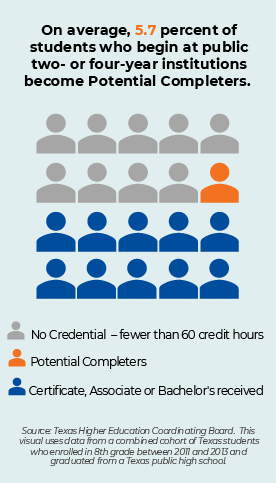 Potential Completers are not students who disengaged early. Many spent years in college, advanced in rigorous majors like engineering, architecture, and business, and maintained solid GPAs.
They invested time, effort and thousands of dollars into their education. Yet without a credential, that progress often goes unrecognized.
Texas can change that.
By building systems that reward the progress students have already made, the state can turn unfinished pathways into meaningful credentials that expand opportunity for individuals and strengthen the workforce.
Texas 2036 recommends five key strategies to fully recognize the progress of Potential Completers:
- Establish retroactive credentialing so four-year universities can award associate degrees to former students who have already met the requirements.
- Expand embedded credentials so students receive recognition earlier in their college careers.
- Streamline reverse transfer to ensure students who begin at community colleges and transfer to a four-year institution before completing an associate degree receive associate degrees when eligible, even after transferring.
- Improve credit portability so courses transfer consistently across institutions, reducing wasted credits and lowering the risk of students leaving without a credential.
- Advance competency-based education to allow students to earn credit for demonstrated skills and knowledge, providing additional pathways to completion and recognizing learning that occurs both inside and outside the classroom.
By advancing these policies, Texas can unlock the potential of thousands of students who have already invested in their education and move closer to building a workforce ready for the challenges ahead.
In the next post in this series, we take a closer look at who Potential Completers are and how they moved through higher education.