

This is a preview of our Texas 2036 newsletter launching the seventh episode of our Future of Texas podcast with our guest, Pablo Vegas, on the future of electricity and the Texas grid. To receive this weekly look at our work, sign up here.
Episode 7: The Future of Electricity in Texas

(Left to right) Host Brad Swail talks with ERCOT President and CEO Pablo Vegas and Jeremy Mazur in episode seven of the “Future of Texas” podcast series.
Texas’ economic and population growth are driving a rapid rise in electricity use, placing new demands on both the grid and the state’s electric market.
The challenge for the next decade is ensuring generation and infrastructure can keep pace while maintaining reliability and affordability.
The Future of Texas series continues with a closer look at how Texas will continue to keep the lights on.
Our Podcast Guest: Pablo Vegas
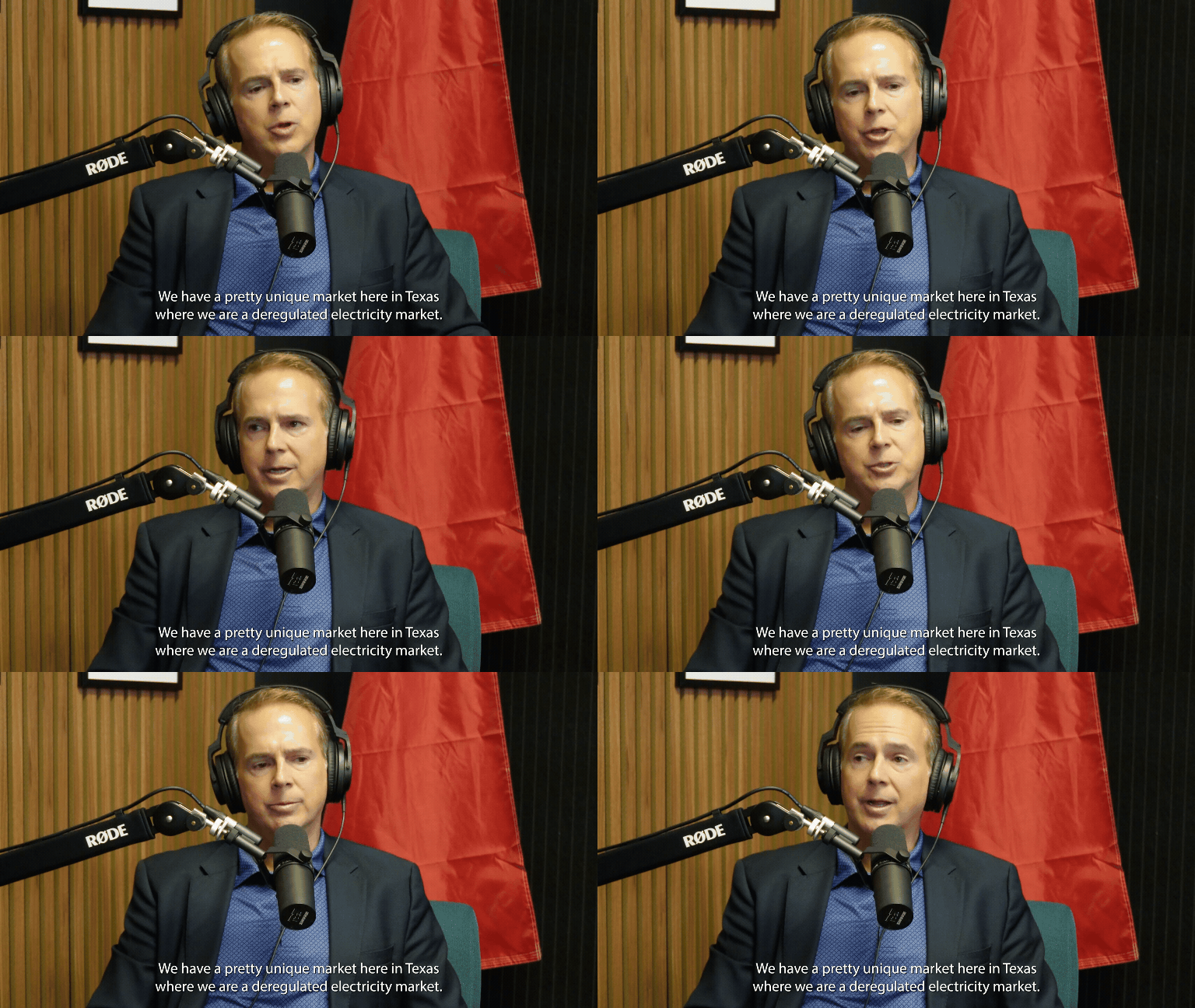
Pablo Vegas, president and CEO of the Electric Reliability Council of Texas (ERCOT), joins Jeremy Mazur to explore how Texas’ rapid growth is reshaping both the electric grid and the market that powers it.
They examine how rising demand and new technologies are testing the state’s electric system, and what it will take to keep electricity reliable and affordable in the decade ahead.
📺 Watch the full episode on YouTube
🎙️Listen on Spotify or Apple Podcast
 Texas Electric Power 101
Here are two takeaways from the podcast that Texans should know about the electric grid:
1.) How Texas’ Electric System Works
Competitive Retail Market of Texas
By Investor-Owned, Cooperative and Municipal Utility Service Areas
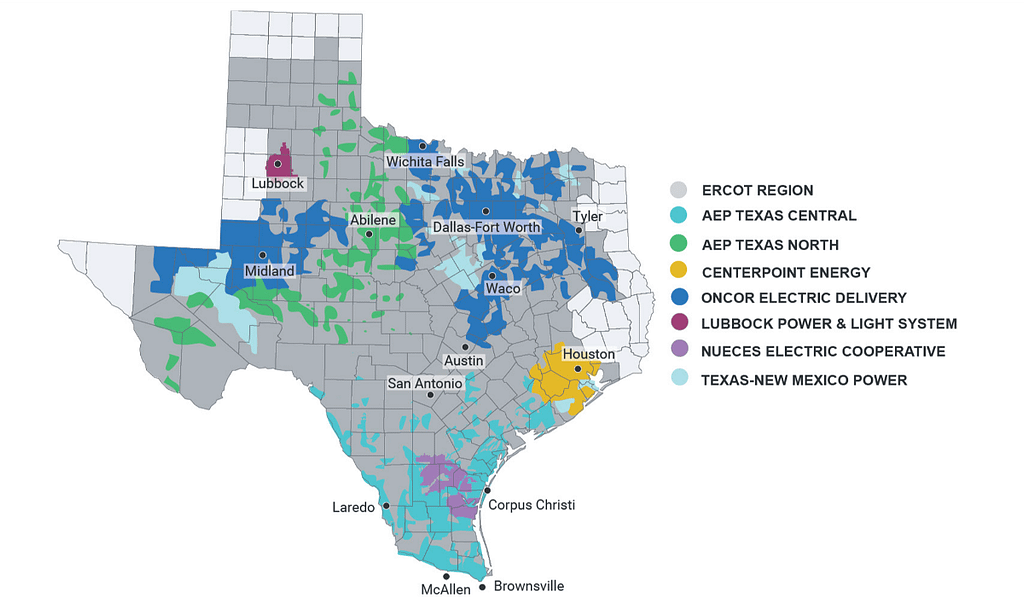
Source: ERCOT Grid Insights Retail Market
Texas’ electric system operates across three segments, with a mix of competitive and regulated functions:
- Generation (competitive): Power generators compete to sell electricity based on price and availability.
- Transmission (regulated): Transmission infrastructure remains regulated by the Public Utility Commission of Texas (PUCT), as it would be inefficient to have multiple companies building overlapping power lines.
- Retail (partially competitive): Not all Texans can choose their electricity provider. In competitive areas, consumers can choose between retail electric providers that compete on price and services.
Areas served by city utilities and electric cooperatives remain regulated.
📺 Watch: Vegas on Texas’ electric market design
2.) Texas Power Demand: Big, and Getting Bigger
Preliminary Long-Term Load Forecast Peak Demand plus
Transmission Service Providers (TSPs) Request for Information
Submissions (2026-2032)
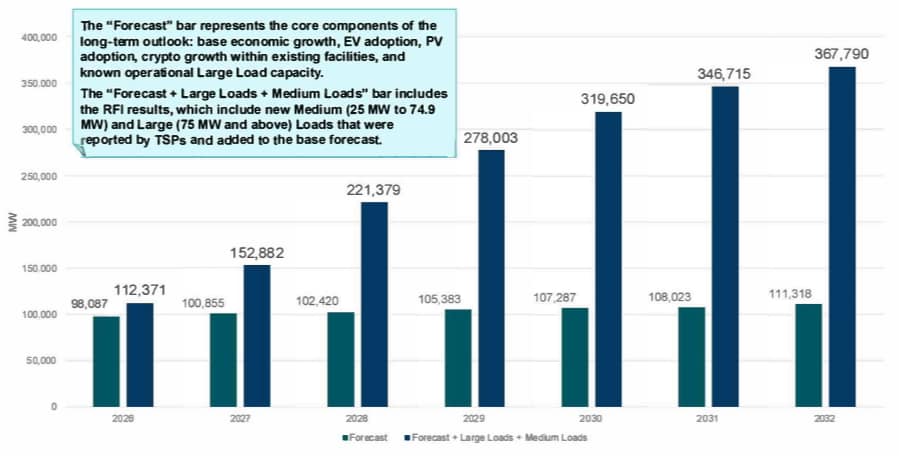
Source: ERCOT Preliminary Long-Term Load Forecast for Years 2026-2032
No state is growing faster. No grid is adding demand faster. Companies building the AI economy, the energy economy, and the next generation of American industry are choosing Texas.
The scale is striking: ERCOT is currently tracking 410 GW of new large-load requests — more than twice the grid’s entire installed capacity today.
Meeting this moment means building transmission, generation and storage at a pace and scale Texas has never attempted.
What Texas 2036 Is Working On
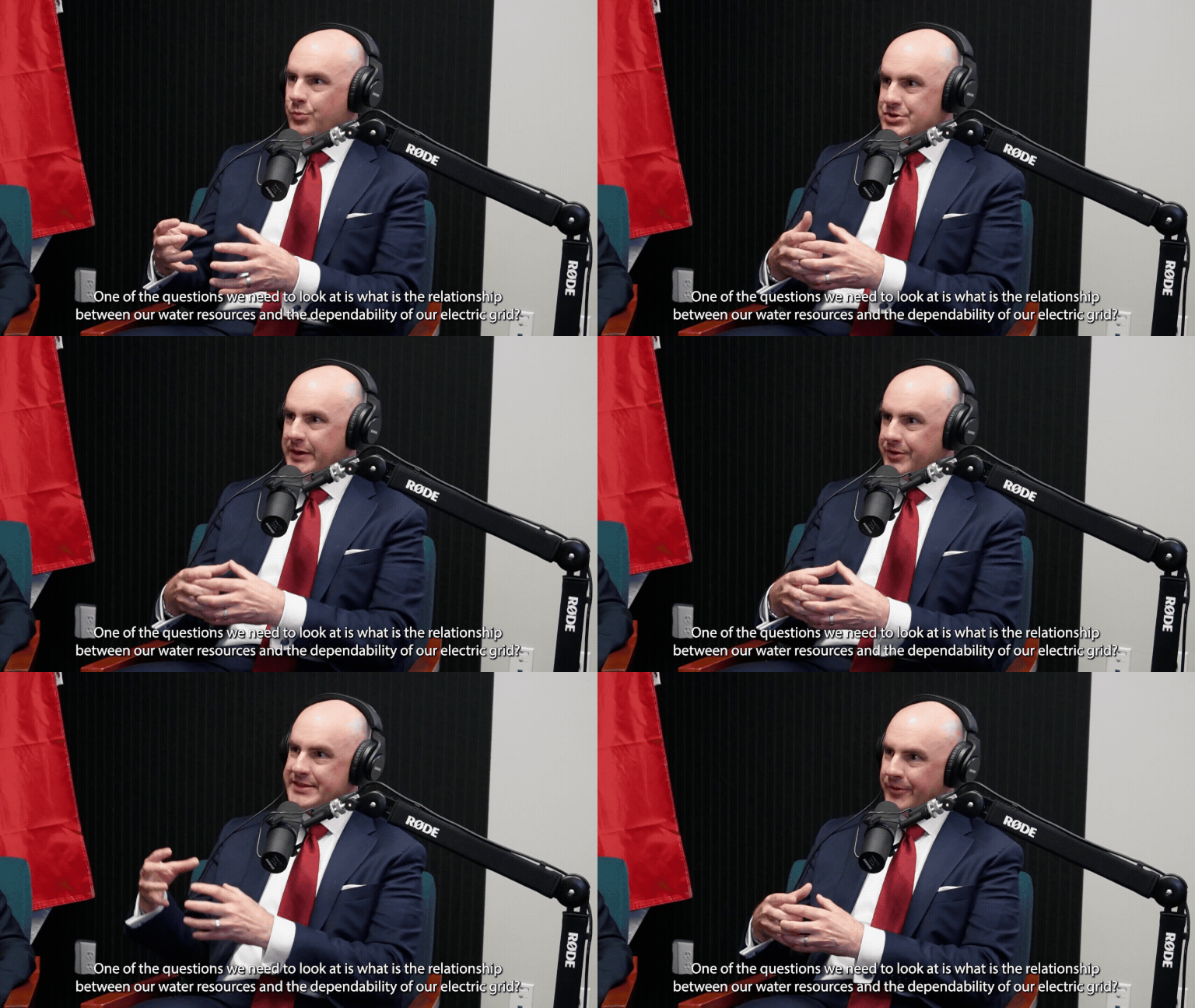
The decisions Texas makes about its electric grid over the next five years will shape the state’s economy, reliability and affordability for decades. Getting them right requires good data, clear analysis and people willing to work through the hard tradeoffs together.
Right now, we are:
- convening energy stakeholders across generation, transmission, markets and emerging technologies to build the consensus Texas needs to act.
- tracking relevant interim hearings, rulemaking and PUCT proceedings — from SB 6 implementation to data center policy to the transmission cost decisions that will show up on your bill.
- translating the complexity of Texas energy policy into the clear, accurate information that leaders across the state need to make good decisions.