

This is a preview of our Texas 2036 newsletter discussing the state of childcare in Texas. To receive this weekly look at our work, sign up here.
Roughly 5.5 million students are returning to Texas public school classrooms this month. The backpacks and first-day photos may look familiar, but the public education system behind them is changing.
Here’s what’s on our minds as the bell rings and Texas educators and policymakers prepare for the next legislative session.
Enrollment: Who’s Actually Filling the Classroom?
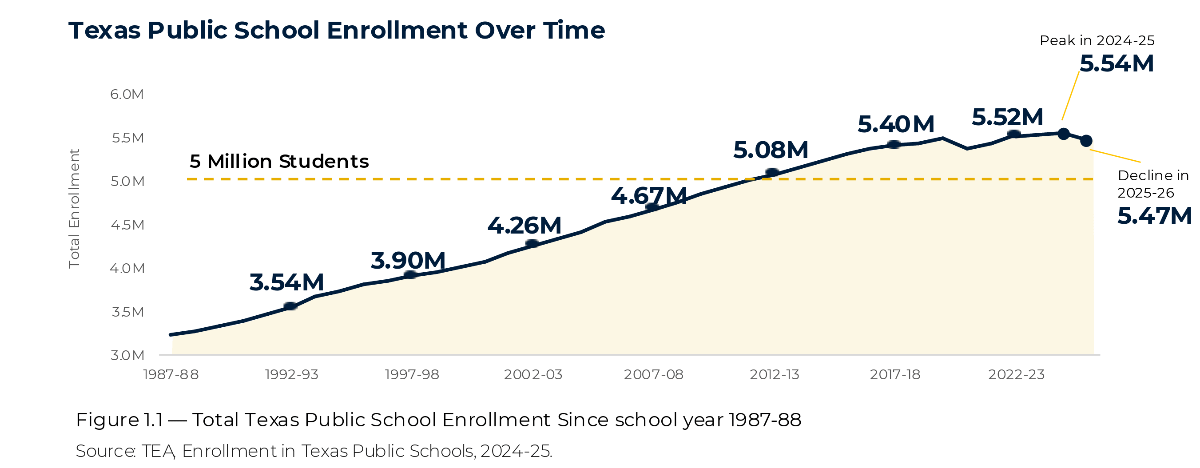
While we’ve grown accustomed to Texas’ population and growth story, our analysis earlier this summer showed that 76,000 fewer students enrolled in public school last year, the largest non-pandemic, single-year decline in nearly four decades. At the same time, Texas’ population grew by 391,000.
Who didn’t enroll: Hispanic students accounted for roughly 4 in 5 of the statewide decrease in public school students. Enrollment fell in 18 of Texas’ 20 education regions, with the steepest drops in the Rio Grande Valley, Amarillo and Midland, and nearly 60% of the decline occurred in grades K-5.
Why it matters: Shrinking elementary school enrollment affects both school funding and future workforce needs. Texas 2036 projects that the decline could grow from 76,000 fewer students today to 100,000 fewer public school students by 2030.
📊Explore our analysis of Texas’ changing public school enrollment
A-F Accountability: Decoding Your School’s Grade
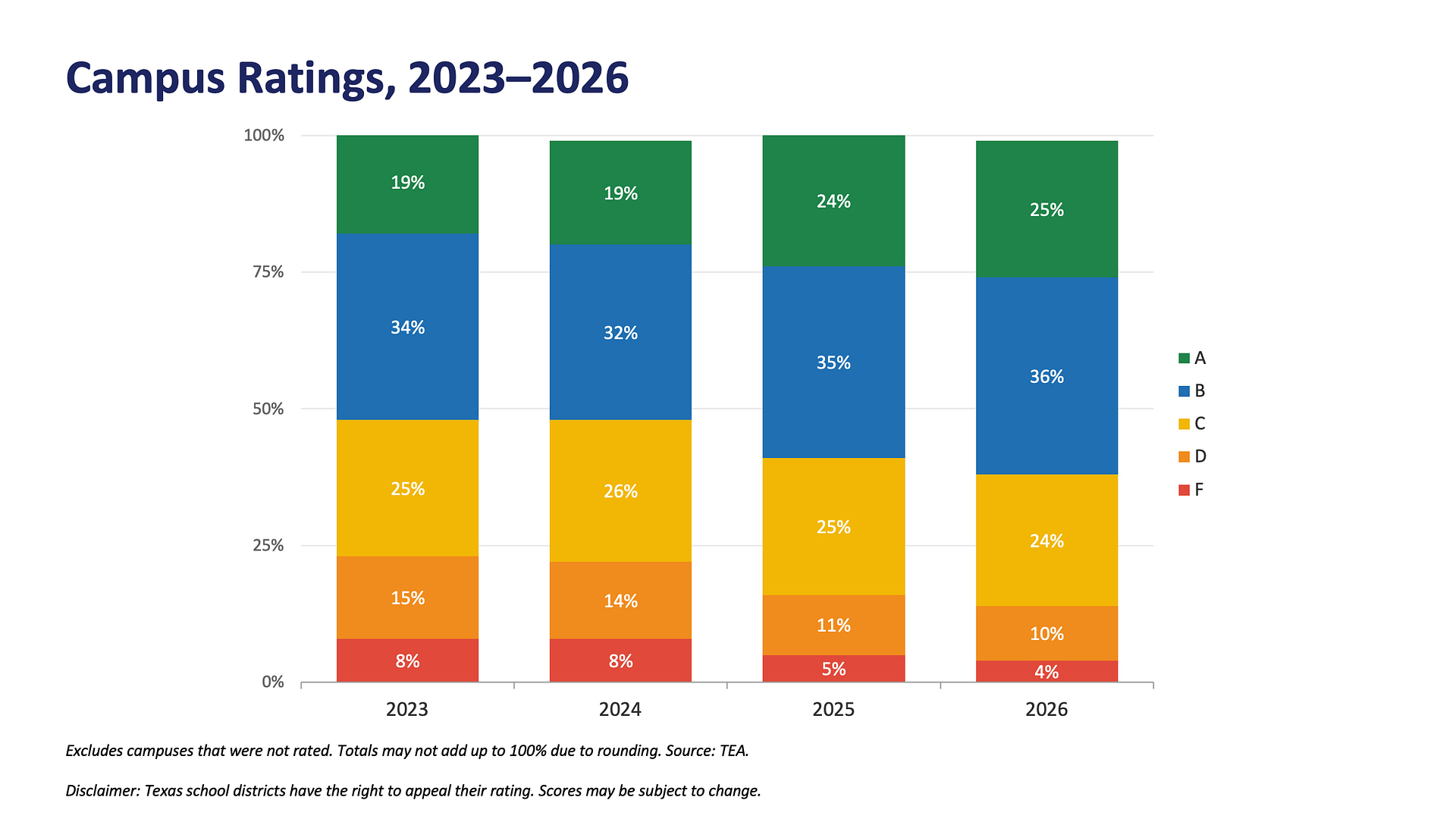
Approximately 6 in 10 Texas campuses earned an A or B in 2026, while 85% received an A, B or C. About one in four campuses improved from last year, and more than three-quarters maintained or improved their rating.
Challenges remain: 10% of campuses received a D and 4% received an F.
What does A-F measure? Texas’ letter grade system evaluates campuses, school districts and charter systems on student achievement, academic growth and how well they are closing gaps among student groups. The accountability system gives families critical insight into how their campus compares to others across the state.
How did my school do? Our A-F Action Center explains how the ratings are calculated, what an A-rated school and what an F-rated school might look like and what the latest results mean for students across Texas.
Texas is Entering its Final Year of STAAR
Texas students are beginning the final school year when they’ll be assessed using the STAAR test. The latest results show where proficiency stands as Texas prepares for a new era of better state testing.
The gains: Reading remained above pre-pandemic levels across every tested grade. All five end-of-course subjects improved from 2025, led by Biology and Algebra I.
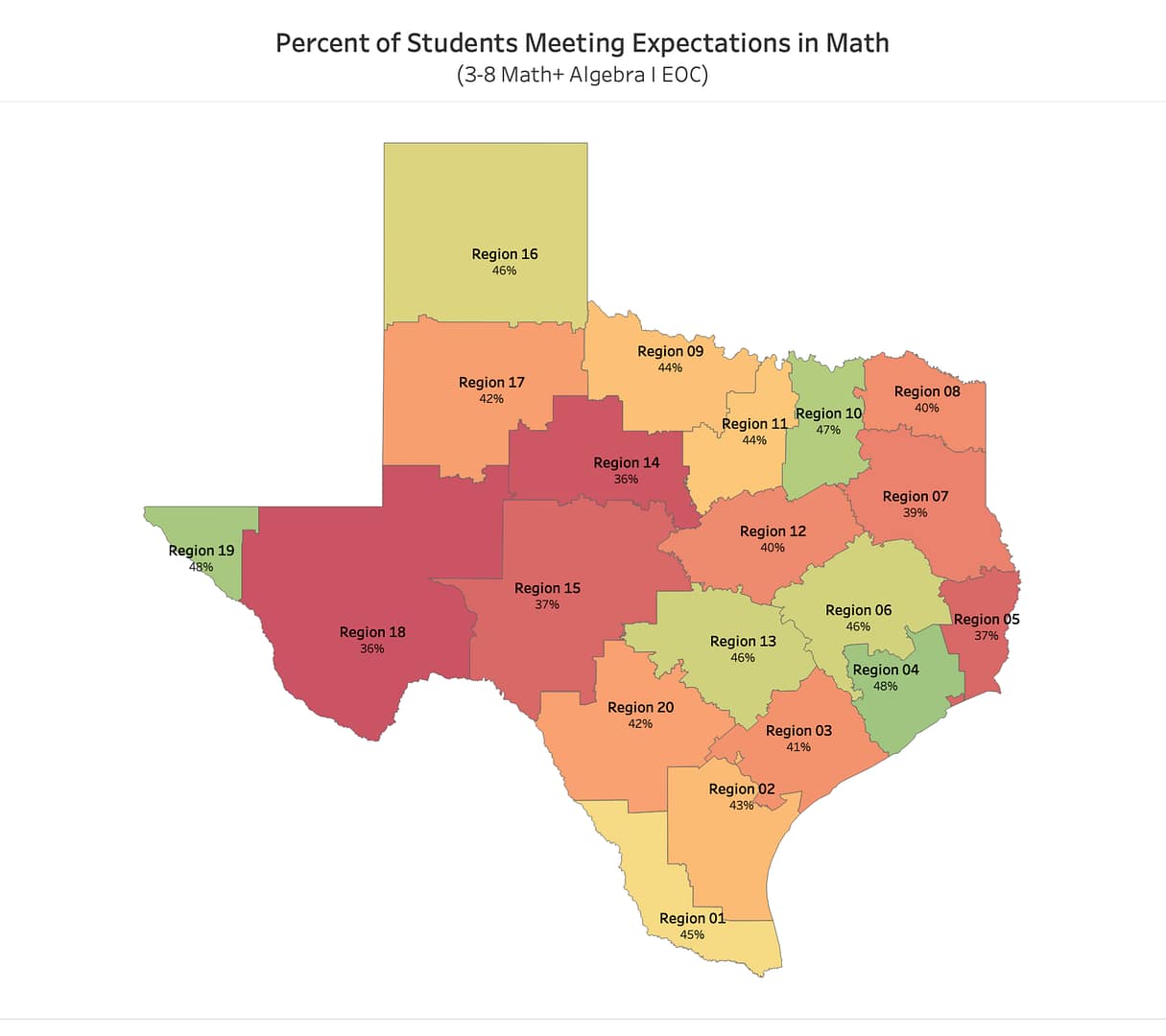
The concern: Math recovery remains incomplete and uneven across Texas. Regional proficiency rates range from 48% in Houston and El Paso to 36% in Abilene and Midland—a 12-point gap, with the lowest rates concentrated largely in West and South Texas.
Statewide, 45% of students met grade-level math expectations in 2026. Although some results improved—including a seven-point gain in Algebra I—overall performance remains below pre-pandemic levels in nearly all grades.
What’s next: Beginning in the 2027-28 school year, three shorter assessments will replace STAAR. The goal is to give parents and teachers faster feedback throughout the school year and reduce testing time by eliminating unnecessary practice or benchmark tests.
Want to learn more? View our guide to Texas STAAR Results 2026
Math Performance is a Trend Line We Can’t Ignore
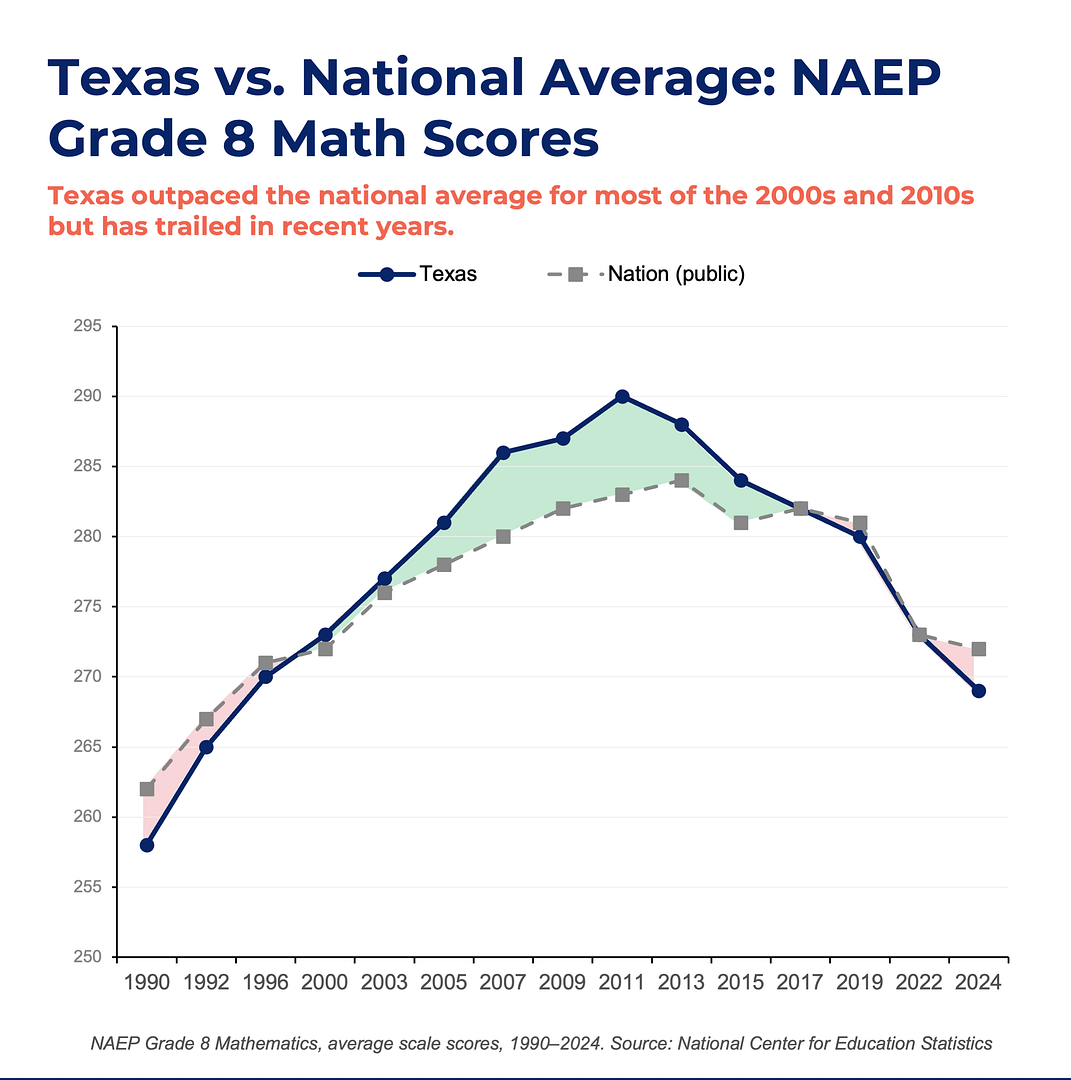
Texas math achievement has been sliding since 2011, long before the pandemic. What’s driving a 15-year slump, and what would it take to reverse it? We’re digging into the data now for a new report coming this fall.
Watch: Texas 2036’s Mary Lynn Pruneda explains why strong math skills are essential to students pursuing high-demand skills trades in Texas.
Readiness Means More Than A Diploma
Texas high schools have been changing, with more students earning college and career credentials before leaving high school. The state’s accountability system rates high schools on the number of students who met a college or career readiness indicator.
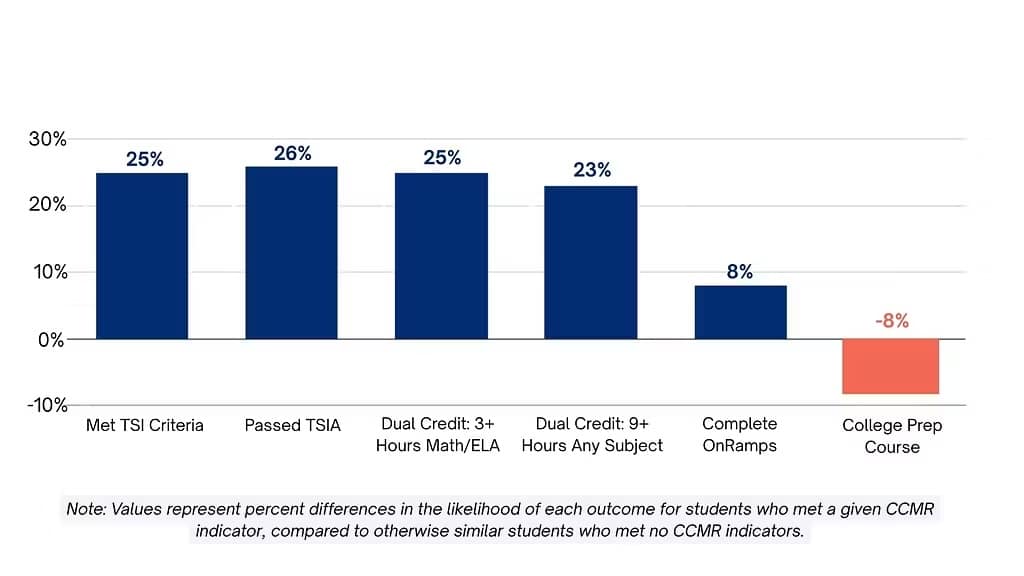
However, the data shows that some of these accountability indicators are more predictive of postsecondary success than others. Research from Texas Tech University shows the impact of these indicators on a student’s likelihood of degree or certificate completion.
Degree or Certificate Completion Likelihood by College, Career or Military Readiness (CCMR) Indicator
Understanding Which Program Works Best For Your Child is Important
Given all the options available today, it’s important for students, parents and educators to understand the relative outcomes of different programs.
Rigorous dual-credit courseloads and college readiness scores are associated with a greater likelihood of earning a degree.
The larger goal: Every Texas student should leave high school with a credential of value or be prepared to succeed in college without remediation, in a career or in the military.
Where Is Texas’ Biggest Opportunity in K-12 Education?
The data shows where Texas students are gaining ground and where challenges remain. Now we want your perspective.
Answer two quick questions about where Texas could make the greatest difference for students in the years ahead.