future of texas energy Texas 2036 has launched a new interactive tool offering unprecedented insights into the future of Texas’ energy landscape.

Our dashboard provides a comprehensive, data-driven view of potential outcomes of energy policy options, empowering policymakers, business leaders and citizens to make informed decisions about the state’s energy future.

SEE OUR TOOL IN ACTION!

Explore how different market pathways might shape the energy production capacity and the economic and environmental outlooks for Texas and its 12 diverse regions.

The Four Scenarios

The Future of Texas Energy dashboard examines four key scenarios, each driven by a unique combination of energy technologies that are making headlines today.

Status Quo: A “business as usual” energy future without major advances in renewable, hydrogen or fossil fuel energy technology.

Advanced Fossil: An energy future focused on fossil fuel production with carbon capture utilization and underground storage.

Energy Transition: An energy future focused on renewable energy, decarbonization and electrification.

Energy Expansion: An energy future reflective of an “all-of-the-above” energy policy, where the costs and technologies associated with fossil fuel and renewable production improve over time.

First 10 Key Findings

Furthermore, under the three scenarios involving greater use of new energy technologies, economic growth outpaces that within the Status Quo scenario.
1. The Texas Economy is projected to do well through 2050 under all four scenarios.
Previous The models show that creating market opportunities within the energy sector for a diverse and broad array of energy technologies will have a positive impact on the state’s future economic growth. Next Slide Economy & Jobs Output (GDP + Intermediate Inputs) by Region and Scenario - 2025-2050 Average
2. Texas is primed to continue leading the nation in energy production, which contributes to the expansion of the state economy. Within all scenarios, increased energy generation, through both greater oil and gas production and renewable energy, contributes to net increases in Texas' energy output of between 26% and 59% by 2050. Next Slide Previous Energy Production Energy Production — 2025 to 2050
3. The models project significant Texas
employment growth
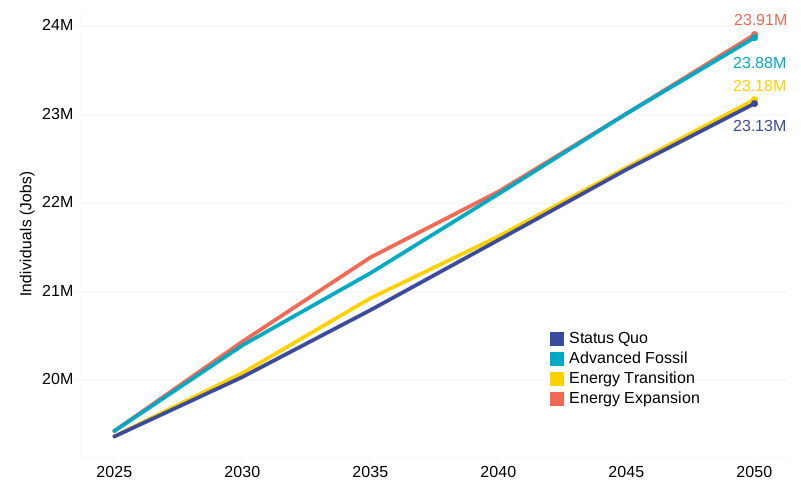
of between 19% and 23% by 2050.
Under the four scenarios, total jobs are projected to increase statewide from 19 million in 2025 to between 23 million to 24 million in 2050, a net increase of at least 4 million. The models show that lower oil and gas prices, as well as lower electricity prices supported by renewables, contribute to greater manufacturing activity and jobs. Next Slide Previous Energy Job Growth Statewide employment — 2025 to 2050
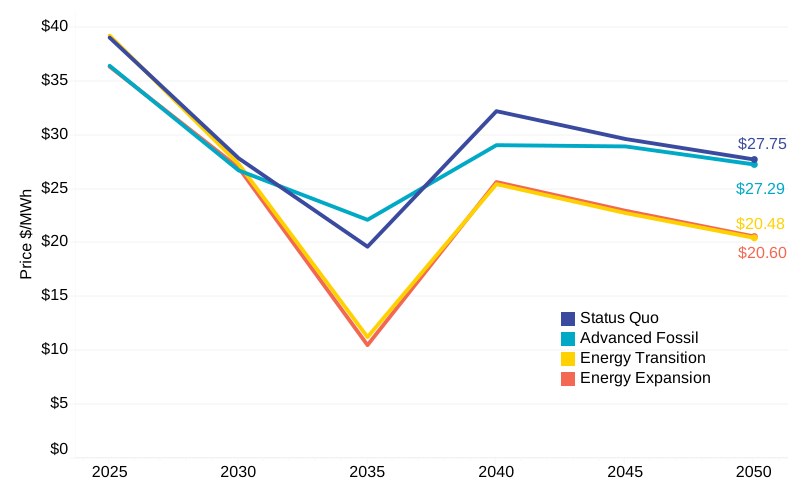
4. All four scenarios project lower wholesale electricity prices from increased natural gas and renewable energy production. Next Slide Lower electric prices should have a positive impact on the economy. However, they also support concerns that Texas’ electric market will not be attractive enough for future capital investment in dispatchable forms of generation, particularly natural gas-fueled electricity generation, that are key to grid reliability when electric demand is high and wind and solar are unavailable.
Previous Electricity Prices Wholesale Electricity Price by Scenario — 2025-2050 Average
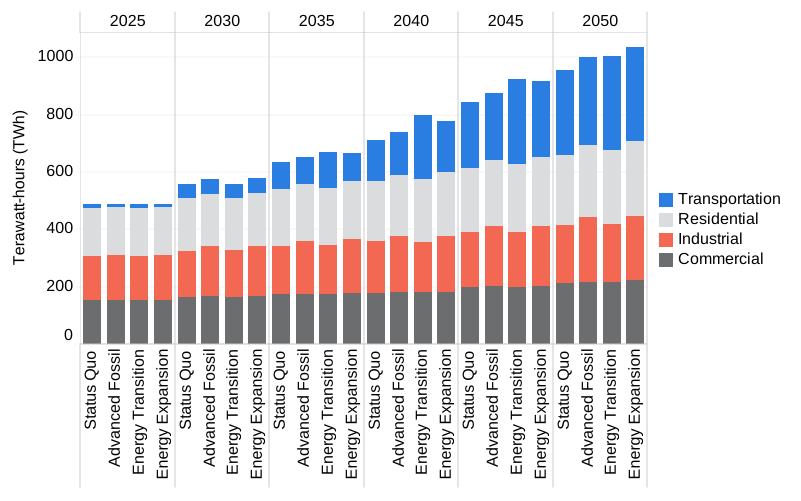
We can attribute this surge to multiple factors, including the state’s economic growth, an increase in air-conditioning usage due to more hot-weather days, the expansion of data centers, the proliferation of electric vehicles, and the broader adoption of electric appliances. To accommodate this escalating demand, Texas will need to attract additional electric generation capacity. Given the multi-year horizon required to bring power online, market and policy decisions will need to be initiated well before that capacity is needed. 5. Projections from all four models indicate a near doubling of electric demand in Texas by the year 2050. Previous Next Slide Electricity Load Electricity Load by Sector
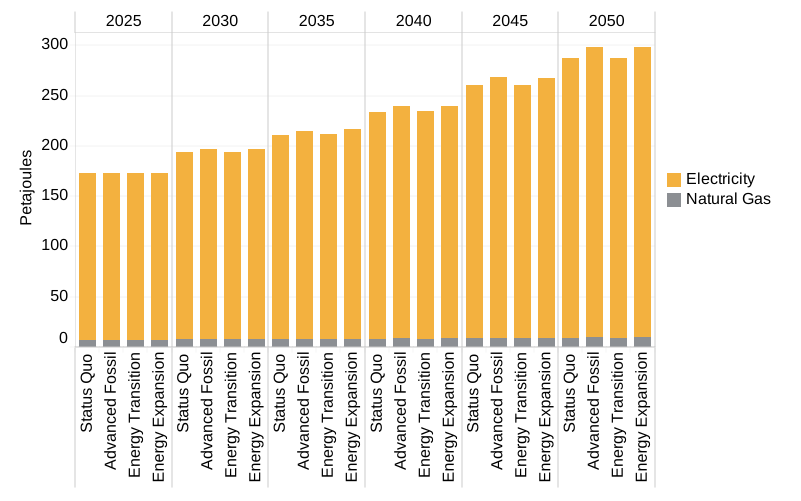
This finding aligns with the extreme weather report we produced in partnership with the state climatologist at Texas A&M, which shows the number of 100-degree days and average state temperatures increasing if trends continue. It also reflects the demographic trend analysis showing Texas’ population will add five million more residents between now and 2036. 6. All models project that Texans will use more electricity to cool residential spaces, which will increase demand by as much as 74% by 2050. Previous Next Slide Energy Production Residential Space Cooling Energy Consumption
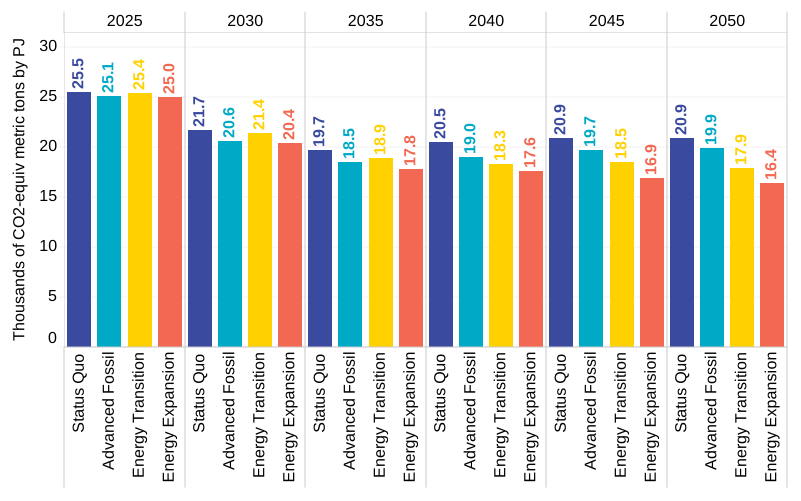
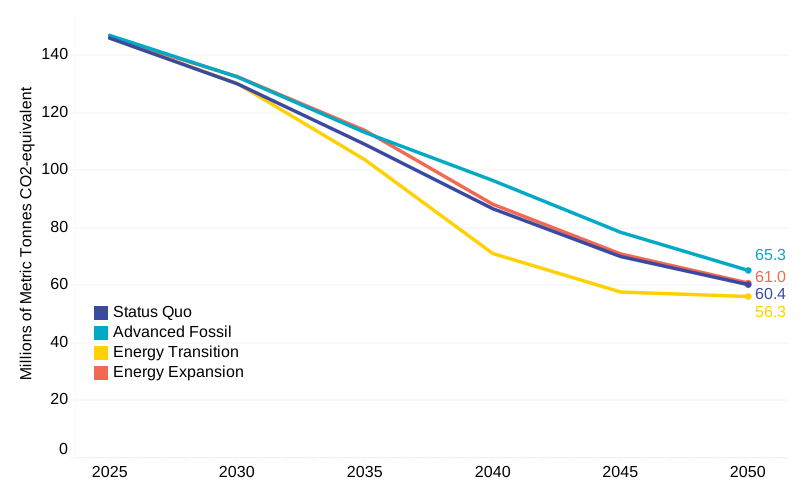
Emissions increase the most under the Advanced Fossil scenario (23.3%), followed by the Energy Expansion scenario (4.3%) and the Status Quo scenario (3%). Under the Energy Transition scenario, they fall by 9.9%. All scenarios predict a decrease in emissions from the transportation sector. 7. Given the increasing demand for energy to power a growing population and economy, all scenarios modeled show increased greenhouse gas emissions, except for the Energy Transition scenario. Previous Next Slide Emissions Greenhouse Gas Emissions Next Slide 8. Texas energy production is expected to become more efficient, which means that the amount of carbon emissions per energy output, or the "emissions intensity" of Texas' energy production, will decline across all energy scenarios. The Energy Expansion scenario, which forecasts the biggest gains in energy production, returns the greatest decline. Previous Carbon Intensity Emissions Intensity
9. In all scenarios, the number of light-duty vehicles on Texas roadways will increase by as many as eight million in 2050, while the amount of fuel used by those vehicles will decline by about 40%. This is due to the increased uptake of electric vehicle technologies, which become more efficient over the modeled horizon, in all scenarios. For heavy-duty vehicles, hydrogen acts as a bridge fuel before the eventual electrification of the fleet. Previous Next Slide Transportation Light-Duty Vehicle Fleet by Fuel 10. Texas' transportation sector is expected to produce as much as 50% less carbon emissions between now and 2050, due largely to greater electrification of light-duty and heavy-duty vehicles in the state. Previous Next Slide Cleaner Transportation Transportation Sector GHG Emissions

LEARN MORE ABOUT TEXAS ENERGY SIGN UP FOR OUR NEWSLETTER
keyboard_arrow_up