

Texas 2036’s 10th Texas Voter Poll found broad agreement on how the state should make healthcare more affordable: 1) Doing nothing is not an option; 2) Require prices up front; and 3) The state should take a more active role in keeping the market competitive.
The strongest result was on price transparency. Asked about requiring transparent, binding prices before non-emergency care, 78.8% of Texas voters were in favor and 10.7% opposed, a margin of 68.1 percentage points. That level of agreement held across party lines. Support extends beyond transparency. Texas 2036 asked voters to weigh eight approaches to healthcare affordability, including doing nothing. Doing nothing came in last: only 17.5% wanted to keep the current system, far less than even the shares that backed a single-payer, government-run system (41.2%) or government-set price controls (50.7%).

Voters also want more information about the companies they rely on.
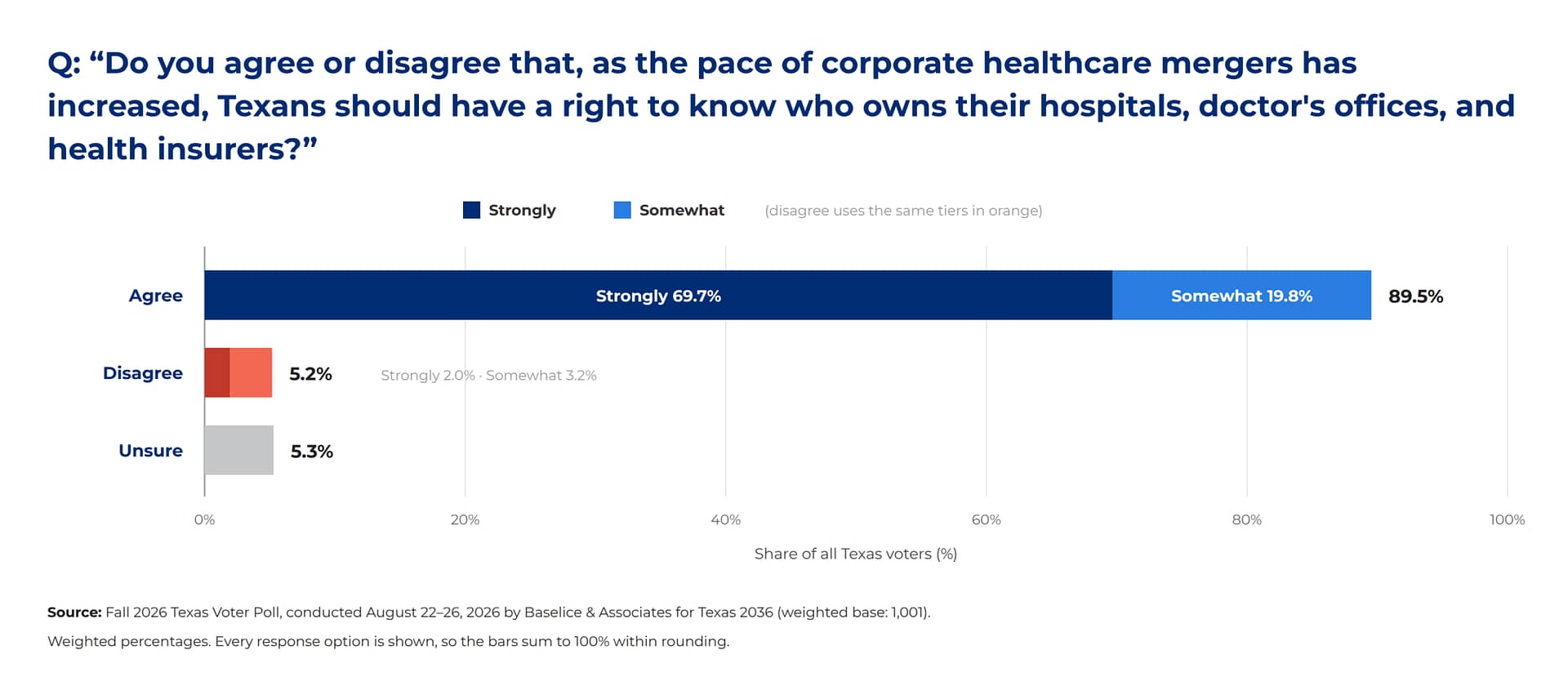
Nearly nine in 10 (89.5%) agree Texans should be able to know who owns their hospitals and insurers, with 69.7% strongly agreeing.
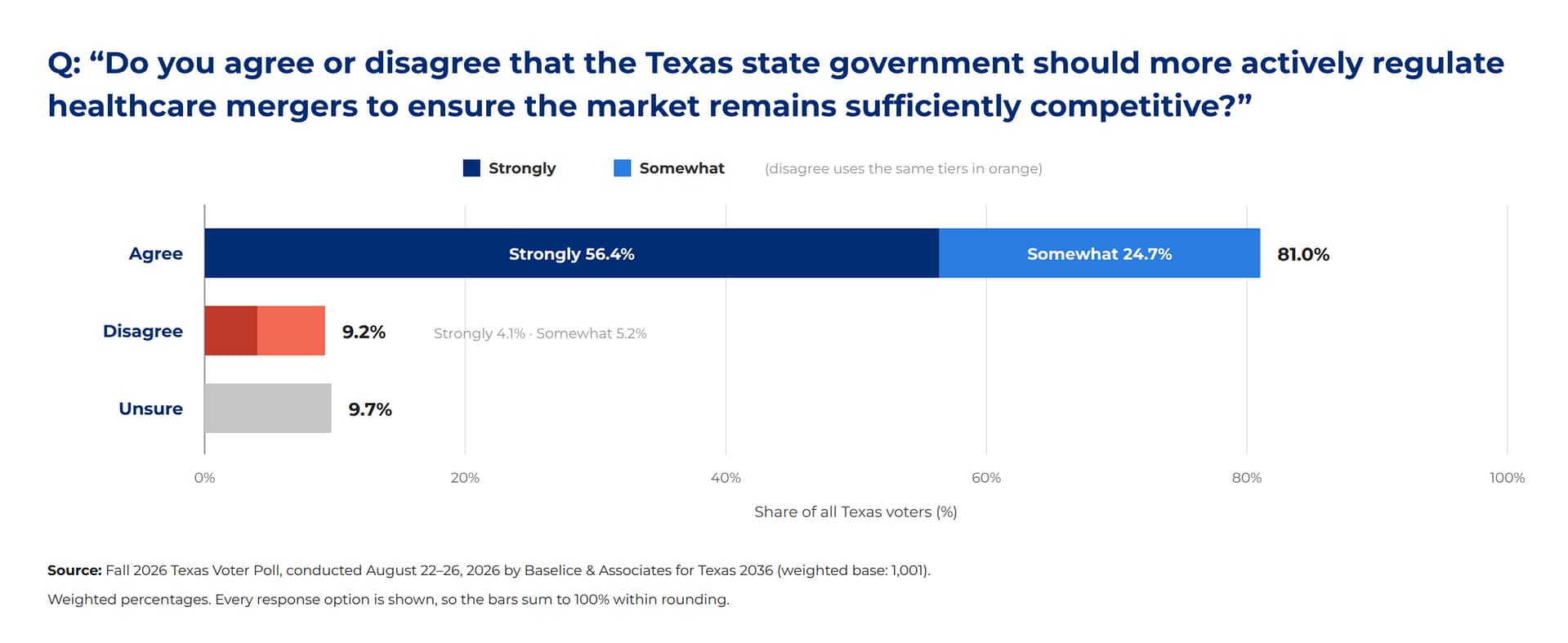
As hospitals, physician practices, and insurers consolidate, 81% want the state to do more to keep healthcare markets competitive, including reviewing mergers before they happen.
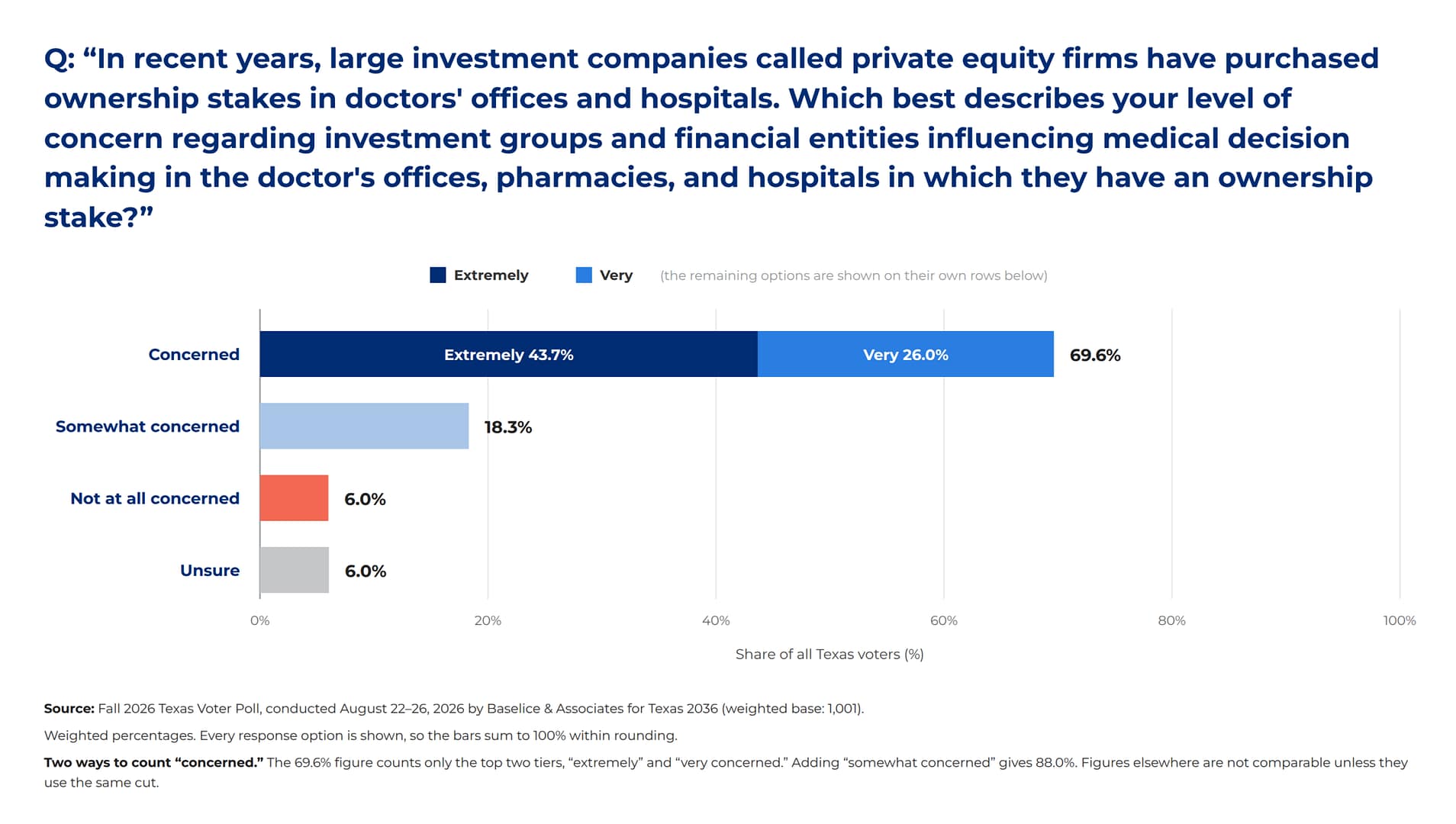
As private equity buys further into medicine, 69.6% say they are extremely or very concerned about investment groups influencing medical decisions in the practices they own, and 88% are at least somewhat concerned.
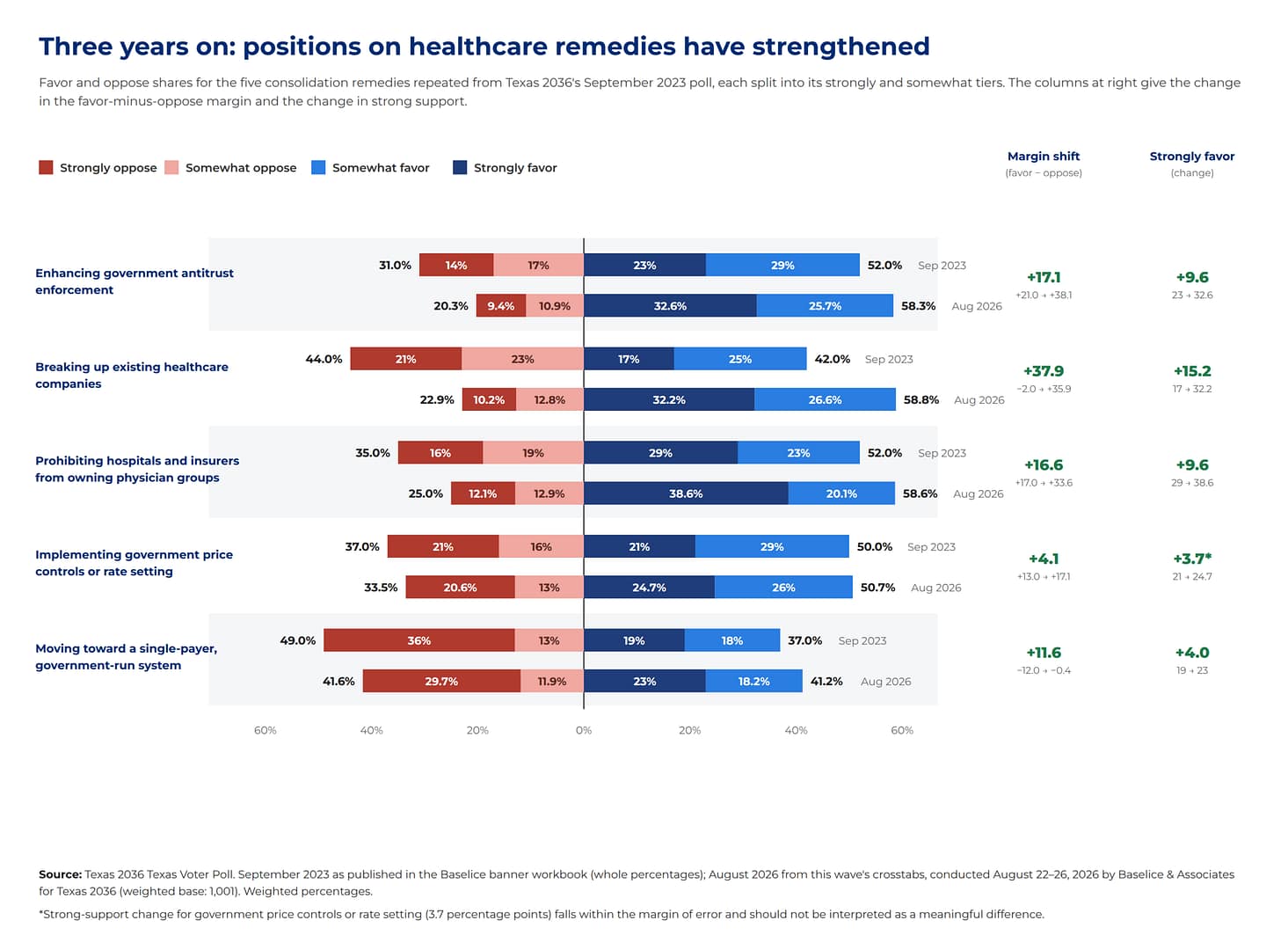
The direction of opinion is consistent over time. Compared with similar questions in Texas 2036’s 2023 and 2024 polls, support for market-based reforms that use competition to hold down prices has risen, and opposition has fallen.
Voters also back the state using its purchasing power. Asked whether the state, which runs the health plan covering most Texas teachers, should press for lower hospital prices even if that reduces hospital earnings, 69.4% said yes and 16.4% said no.

Taken together, the poll points to a specific role for the state: show people prices, disclose ownership, and keep the market competitive as it consolidates.
The 10th Texas Voter Poll was conducted Aug. 22–26, 2026, by Baselice & Associates for Texas 2036, consisting of 1,369 completed interviews with registered Texas voters. Results weighted to represent registered Texas voters statewide with an effective sample size after weighting of 1,001. Margin of sampling error is ±3.1 percentage points.