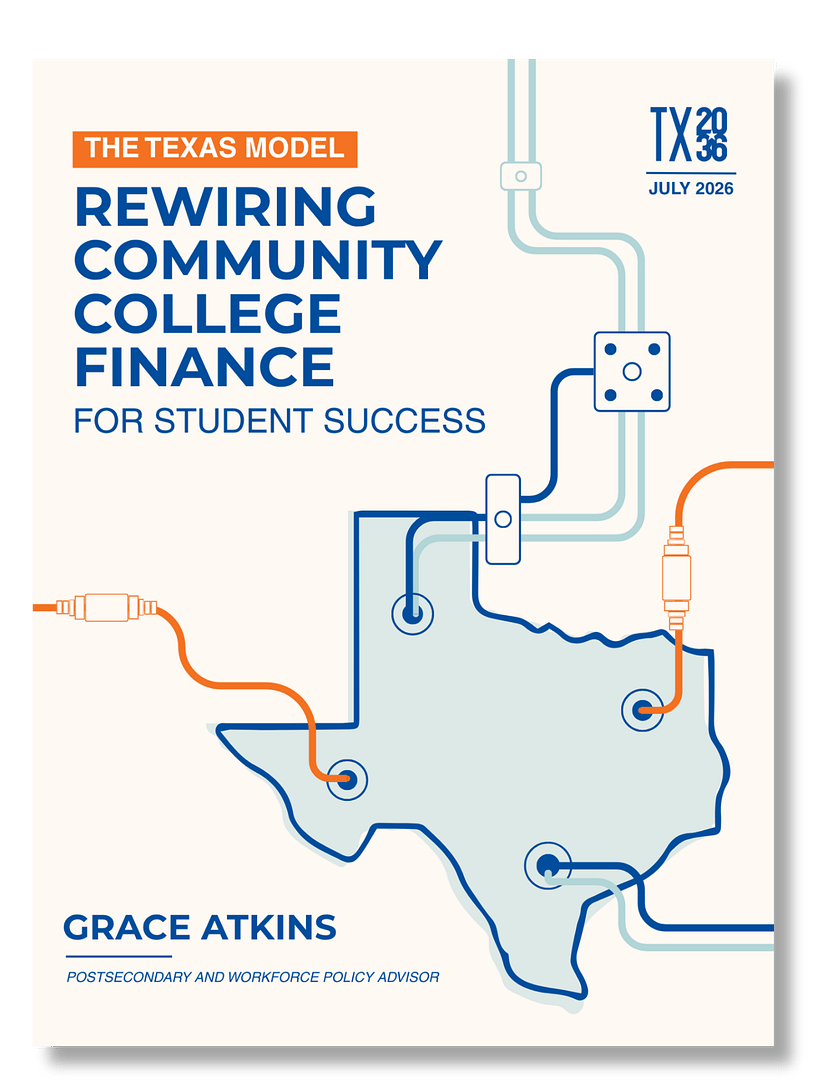
Texas’ outcomes-based community college funding model is already showing early signs of progress, with growth in credentials, high-demand fields, certificates and dual credit enrollment during the first two years of House Bill 8 implementation.
The Texas 2036 analysis points to several encouraging trends from the first few years of implementation (Fiscal Years 2024-25):
- 22.3% increase in the number of credentials awarded, with a 26% increase in credentials awarded in high-demand fields
- 20% increase in the number of high school students enrolling in dual credit courses
- 24.2% increase in short-term credentials, also known as certificates. Certificates accounted for 53% of all credential growth and 74% of credential growth in high-demand fields.
Early Results From Texas’ Community College Funding Model
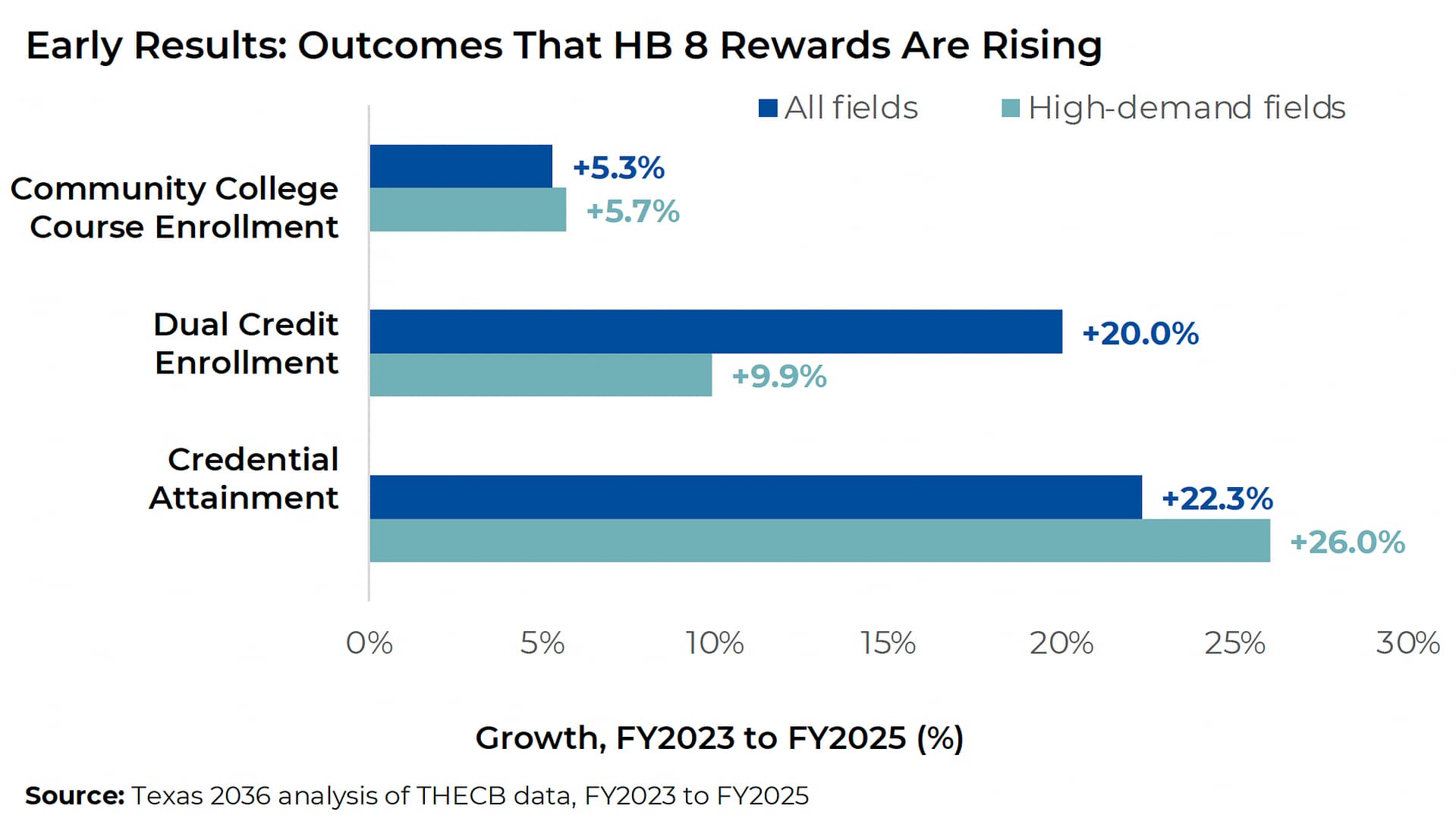
Texas community colleges are beginning to respond to the incentives created by HB 8. Because formula payments began flowing in August 2023, FY 2024 and FY 2025 provide the first look at how colleges are adapting to the new community college funding model.
Across the outcomes the formula rewards most directly, early trends are moving in the intended direction.
Why This Matters

For decades, Texas funded community colleges largely by how many students enrolled in classes. HB 8 changed that approach by tying most state formula funding to student outcomes, including credentials of value, transfer to a four-year institution and meaningful dual credit completion.
Texas community colleges serve nearly 745,000 students and play a central role in workforce preparation, economic mobility and regional talent development.
What Comes Next for Community College Funding Reform
The first two years of HB 8 show promising movement, but the next phase of implementation will shape the long-term impact of Texas’ community college funding reform.
Key questions include how short-term credentials are incorporated into the Credential of Value framework, whether state appropriations keep pace with earned outcomes, and whether growth in credentials and dual credit translates into successful completion, transfers or employment for more students.
Methodology
Texas 2036 analyzed institution-level Texas Higher Education Accountability System data from FY2019 through FY2025. Enrollment and credential data cover Texas community colleges, with credentials identified by 4-digit CIP code and credential type.
The high-demand field analysis uses Texas Higher Education Coordinating Board’s Community College Finance Program FY2024-25 high-demand fields workbook. Year labels refer to Texas fiscal years, which run from Sept. 1 through Aug. 31.
About the Author

Grace Atkins leads Texas 2036’s postsecondary and workforce policy portfolio. Her current focus is community college finance, including the state’s shift to outcomes-based funding under House Bill 8.