

This is a preview of our Texas 2036 newsletter launching the 12th, and final, episode of our Future of Texas podcast with our guest, Wynn Rosser, on expanding opportunity through access to postsecondary credentials in the decade ahead. To receive this weekly look at our work, sign up here.
Episode 12: Ensuring Opportunity for All Texans
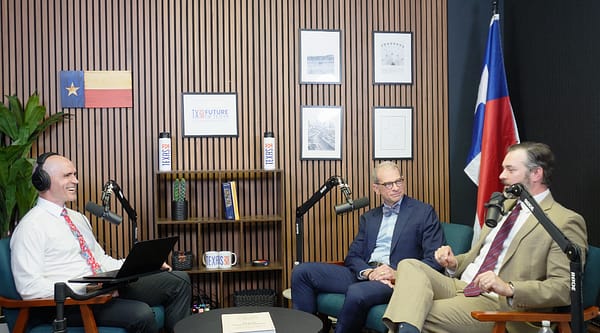
(Left to right) Host Brad Swail, Wynn Rosser and John Hryhorchuk discuss data-driven policy in episode 12 of the “Future of Texas” podcast series.
As graduation ceremonies unfold across Texas this month, students are walking stages with high school diplomas, technical certificates, associate degrees and bachelor’s degrees in hand.
Behind each milestone is a larger question about Texas’ future: Can the state connect students and workers to the education and training pathways that lead to lasting economic opportunity?
In the final episode of our Future of Texas series, we look at how the state is building those pathways and what it will take to extend them to every Texan by 2036.
This Week’s Podcast Guest: Wynn Rosser
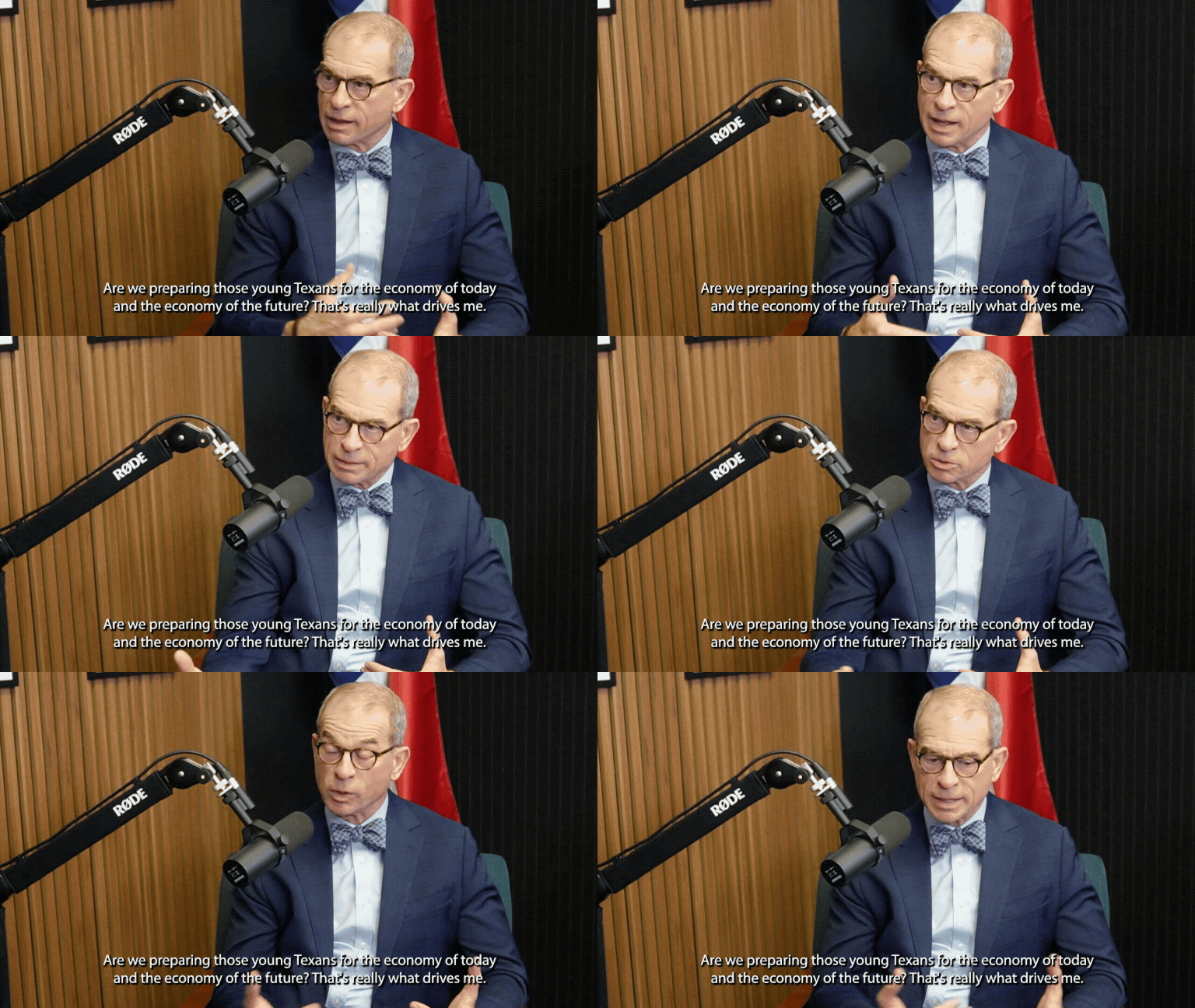
Wynn Rosser, Commissioner of Higher Education for the Texas Higher Education Coordinating Board, joins John Hryhorchuk to explore how Texas is preparing more Texans for the economy of the future, from dual credit and workforce credentials to affordable college pathways and high-demand careers.
More about Wynn:
Wynn Rosser has built his career around a question shaped by his own East Texas upbringing: What does it take to turn a Texas education into a lasting opportunity?
A native of rural East Texas and the son of a first-generation college student, Rosser became the seventh Commissioner of Higher Education in January 2025. His own path ran from community college to a doctorate from Texas A&M, with workforce credentials earned along the way.
📺 Watch the full episode on YouTube
🎧 Listen on Spotify or Apple Podcasts
The Texas Story You’re Not Hearing
Higher Ed Enrollment Increases by Region:
Percentage Growth from 2024 to 2025
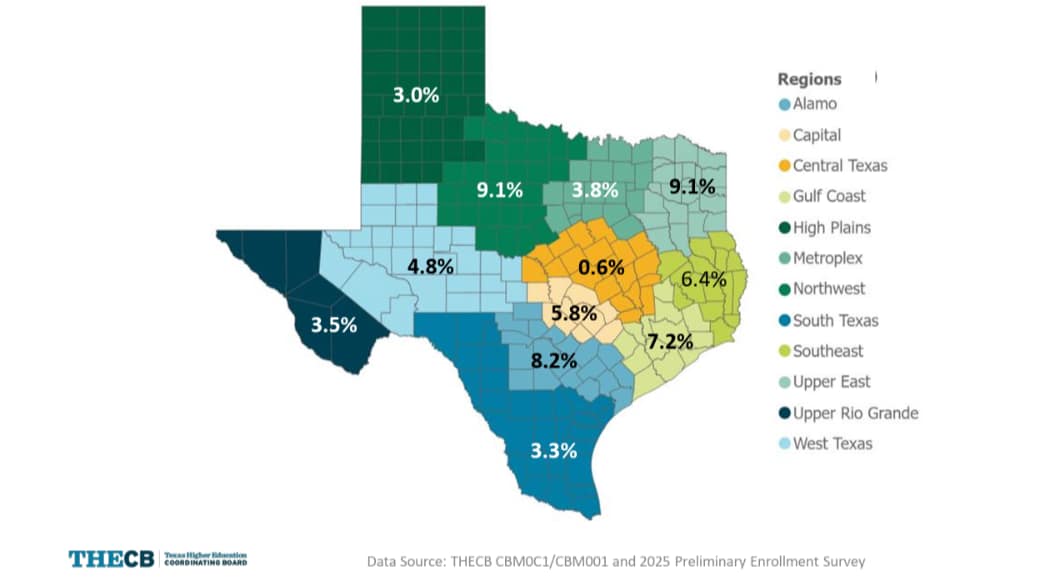
Source: THECB Preliminary Enrollment Fall 2025 presentation
National headlines on higher education tend to focus on rising debt and declining confidence. Texas tells a different story.
This past fall, Texas higher education enrollment reached a record 1.6 million students. On debt:
- Nearly 60% of Texas graduates finish with no debt at all.
- 97.5% finish with no debt or manageable debt relative to their earnings.
- Of those who borrow, the average debt for bachelor’s graduates at Texas public universities is less than $25,000.
The Challenge Behind the Opportunity
Texas has one of the youngest and fastest-growing populations in the country. But the pipeline from high school to credential still narrows along the way:
As John Hryhorchuk explained during the podcast:
- About 90% of Texas students graduate high school.
- About 60% pursue some form of postsecondary education.
- Only about 37% complete a credential or degree within six years of high school graduation.
That 37% is the gap to close. By the end of this decade, most jobs in Texas will require education or training beyond high school, whether a workforce certificate, an apprenticeship, an associate degree or a bachelor’s degree.
 “Every one of those percentages is a real human life. A Texan who will have a better opportunity for themselves and their family if they achieve that next step.”
– John Hryhorchuk,
SVP, Policy and Advocacy
Texas Is Building Faster Pathways

Texas has offered students the chance to earn associate degrees before finishing high school for nearly two decades. The pace has accelerated sharply in recent years, as Texas has become a national leader in helping students earn credentials earlier, faster and at lower cost.
The number of postsecondary credentials earned by Texas high school students has jumped from 23,610 in the class of 2018 to 149,297 in the class of 2024, a 532% increase. Dual credit enrollment is up 36% since 2020, reaching roughly 250,000 students in fall 2024.
Texas dual credit enrollment — 25 years of growth
High school students enrolled in college-level courses at Texas public institutions, fall semester
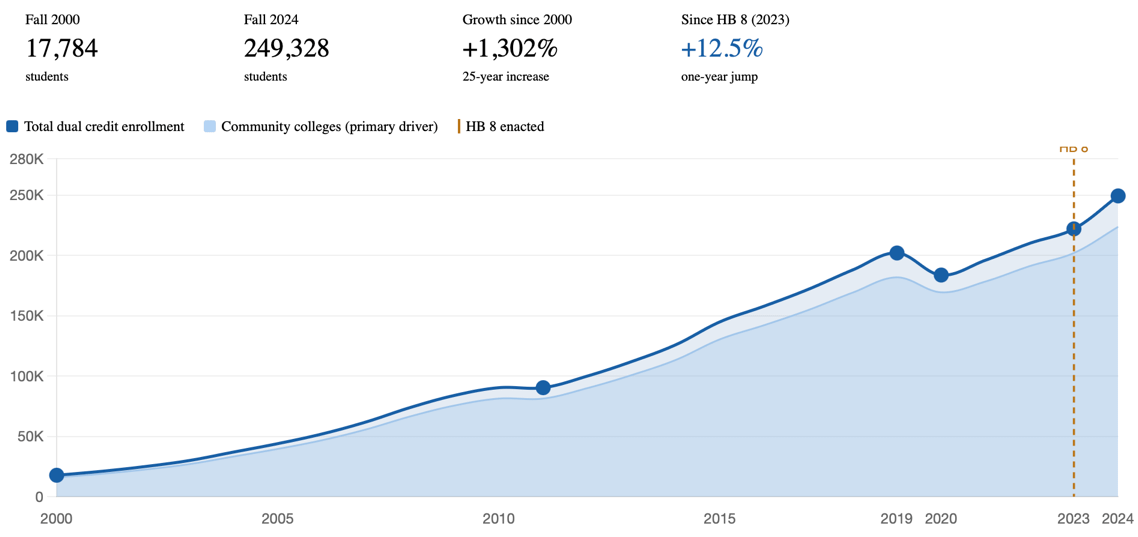
Sources: Texas A&M System Data Science, April 2025 (2020–2024 figures; THECB CBM data) · Texas Comptroller, Feb. 2023 (2011–2021 figures) · 2000 figure from THECB enrollment records via TAMUS Data Science. Intermediate years (2001–2010, 2012–2018) are linearly interpolated for trend display; key anchor years are exact. ACCT Dual Credit Report, Nov. 2025. +12.5% figure reflects community college dual credit enrollment, which accounts for ~90% of total.
Recent state policy has expanded both access and affordability. HB 8 encouraged more community colleges to partner with school districts on dual credit, including in rural communities. The Financial Aid for Swift Transfer (FAST) program ensures those courses are free for students who qualify for free and reduced-price lunch.
Did you know? Two free THECB resources help Texans navigate the path to higher ed. MyTexasFuture.org, the state’s career and college advising platform, lets students match careers to interests, view regional wage data and apply to Texas institutions. Free College Application Week, returning the second full week of October, waives application fees at every public Texas institution through ApplyTexas.
Investing in Community Colleges
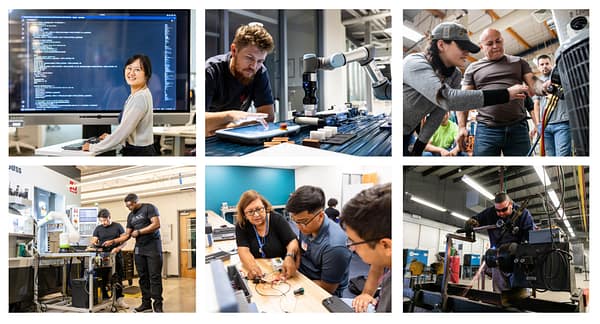
Texas is leading the nation in tying community college funding to outcomes rather than enrollment alone, rewarding colleges when students earn credentials of value, transfer to four-year institutions or complete dual credit coursework.
The bottom line: Texas wants higher education judged by whether students leave with credentials that translate to real careers and earnings, not just enrollment numbers.
 “Getting a student into a high demand field with a credential of value is good for the student. It’s good for the state. It’s good for our local communities.”
– Wynn Rosser, Texas Commissioner of Higher Education
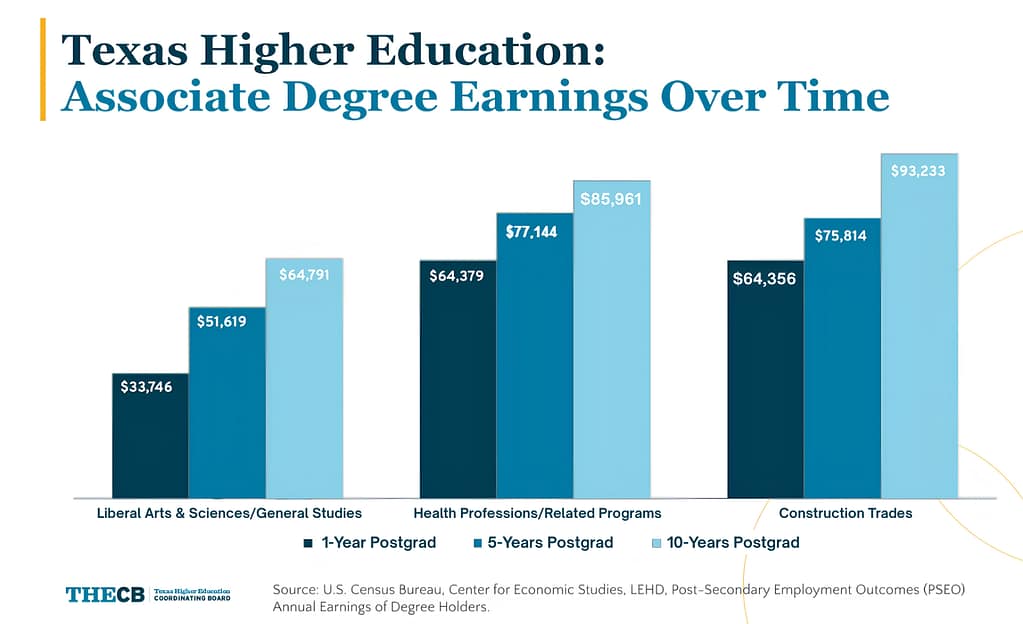
Did you know? Wage outcomes vary widely by field of study. Texas associate degrees in construction trades and healthcare consistently outearn general studies degrees, both one year out and 10 years out.
What Texas 2036 Is Watching
Texas 2036 is tracking the indicators that will tell us whether this progress holds toward 2036:
- Credential completion: Texas is working toward a goal of 550,000 credentials of value awarded annually by 2030. The state reached 403,069 in 2024, well on its way. We’re focused on closing the remaining gap and making sure no student leaves higher education without recognition for what they’ve already earned.
- Dual credit efficiency: Texas has built one of the country’s largest dual credit systems. The harder question is whether those credits stack toward credentials that students can actually use. We’re pushing to align dual credit with high-demand workforce pathways and cut wasted credits.
- Regional labor market alignment: Texas will soon have granular data on local job demand, allowing colleges in smaller and rural communities to tailor programs to the jobs available nearby so Texans can build careers without leaving home.
The Texas Story Is Still Being Written

This is the final episode in our 12-part Future of Texas series.
Ultimately, the future of Texas comes down to its people. The final chapter is being written in real time by:
- The student in Pecos who is earning a welding certificate before graduating high school.
- The working mother in Laredo who is completing an associate degree at night.
- The first-generation student in East Texas navigating college applications for the first time.
Opportunity in Texas no longer follows one path. It may begin with dual credit. A workforce credential. A community college. An apprenticeship. A university degree. Or all of the above over a lifetime.