Are Texas students ready forlifeafter high school?Are
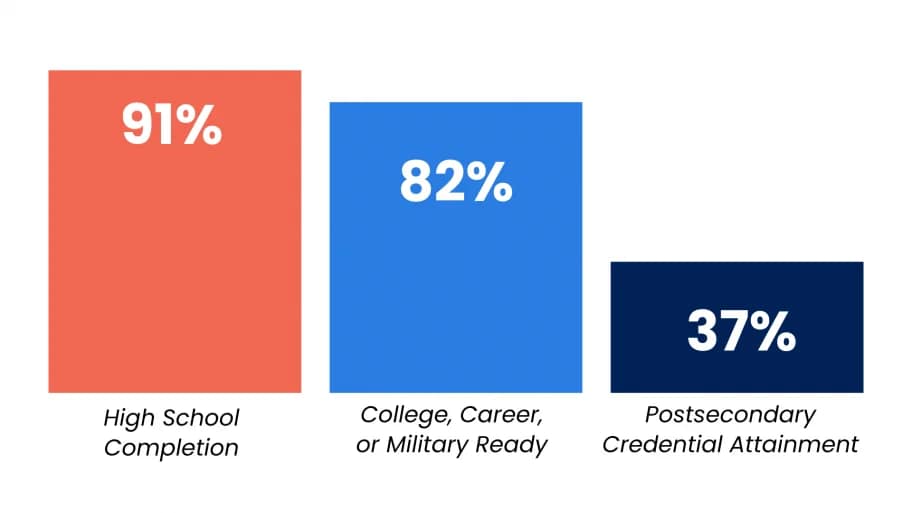
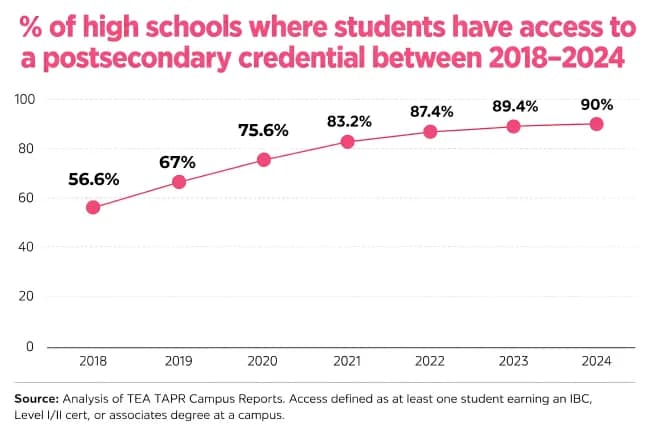
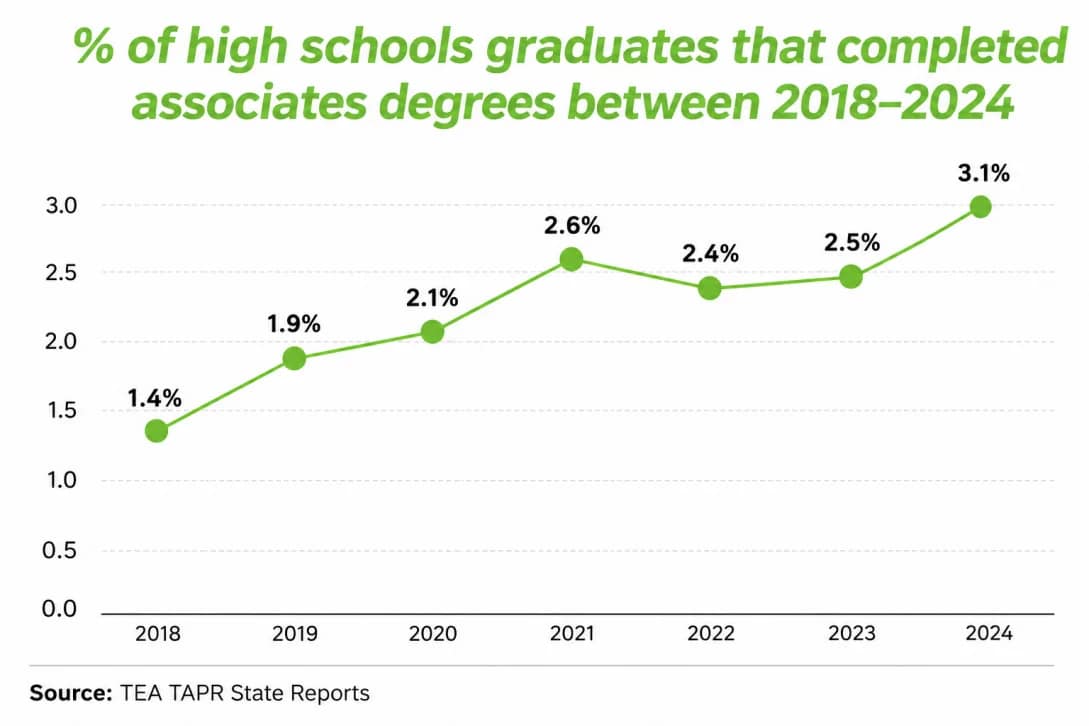
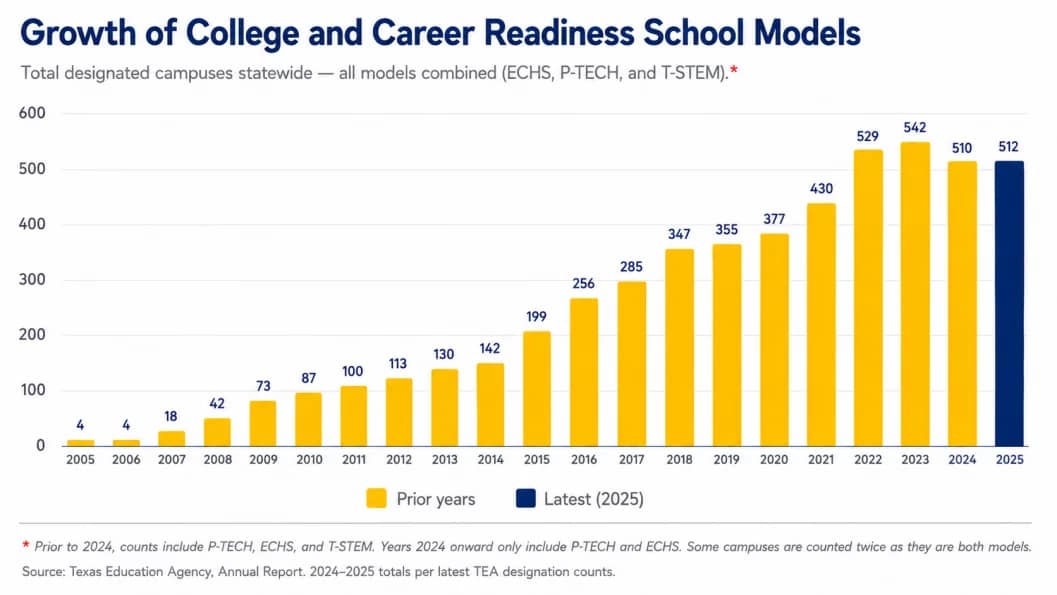
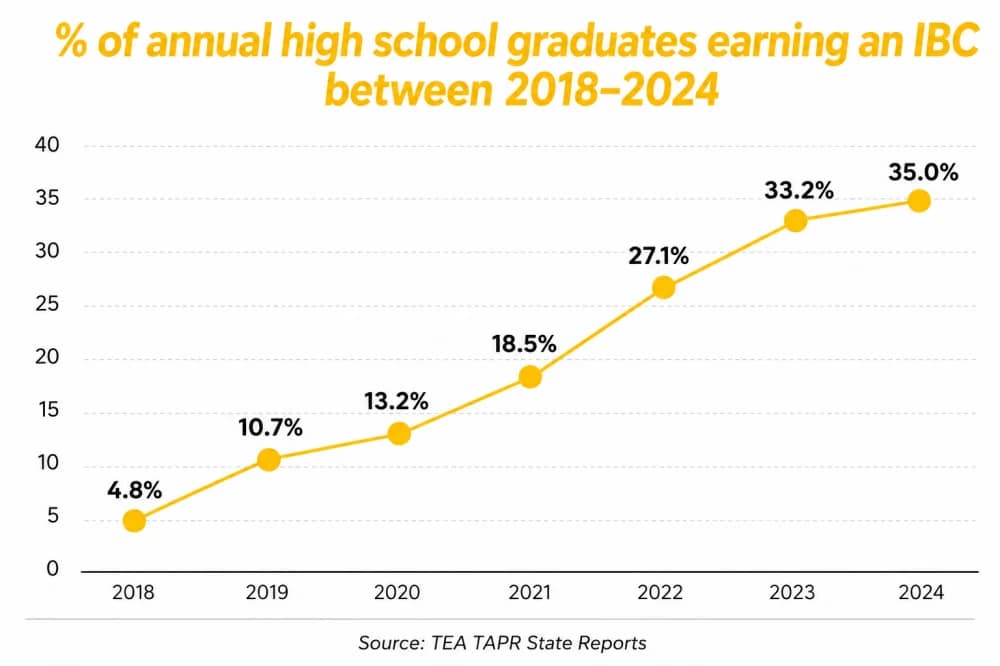
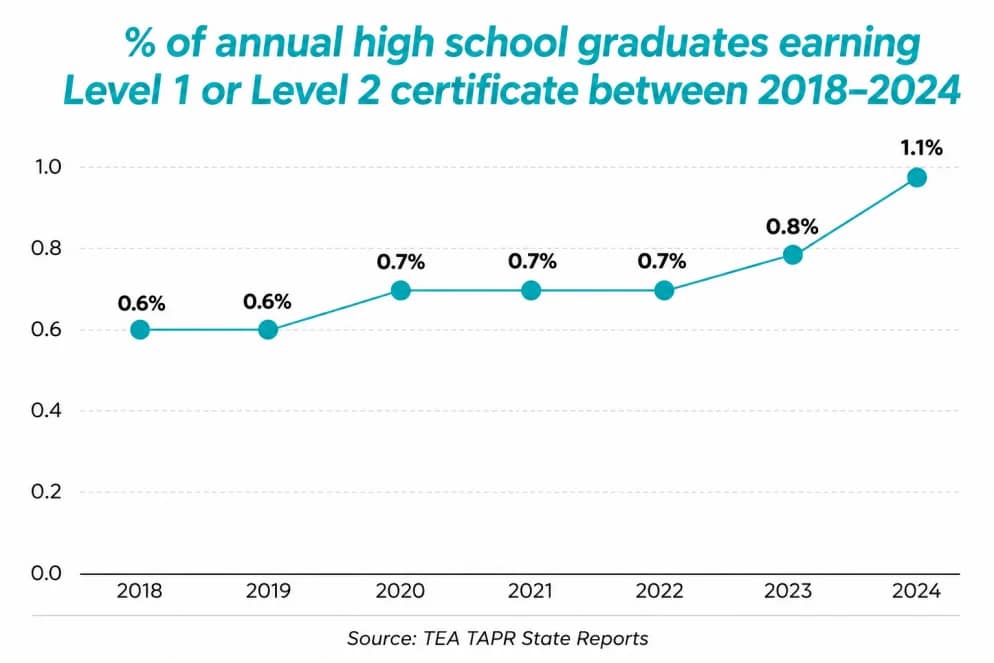
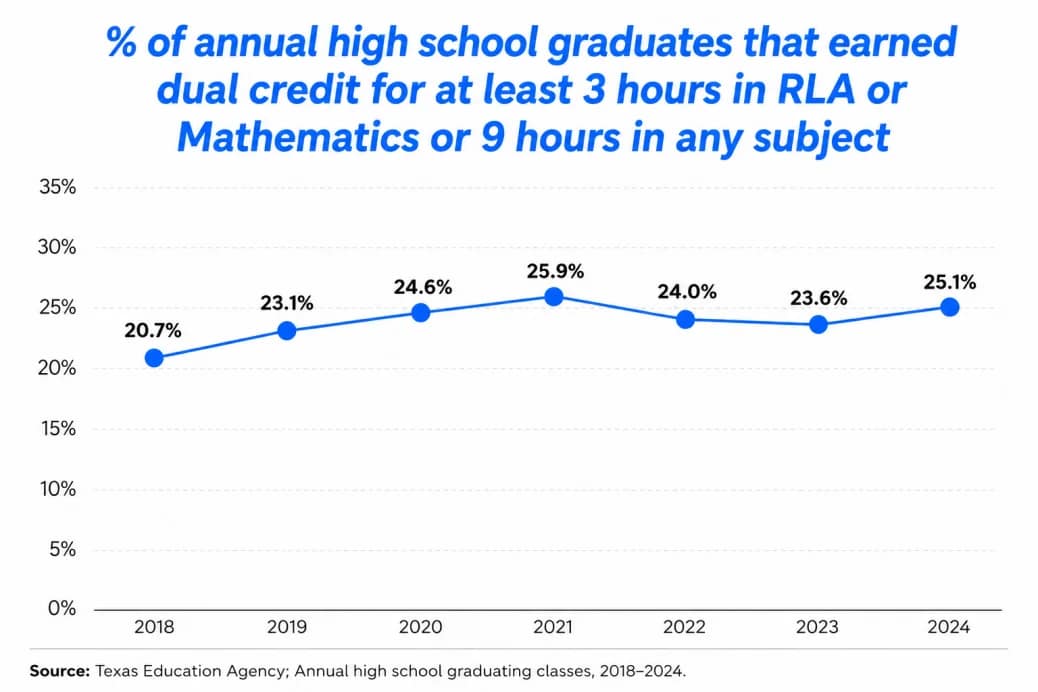
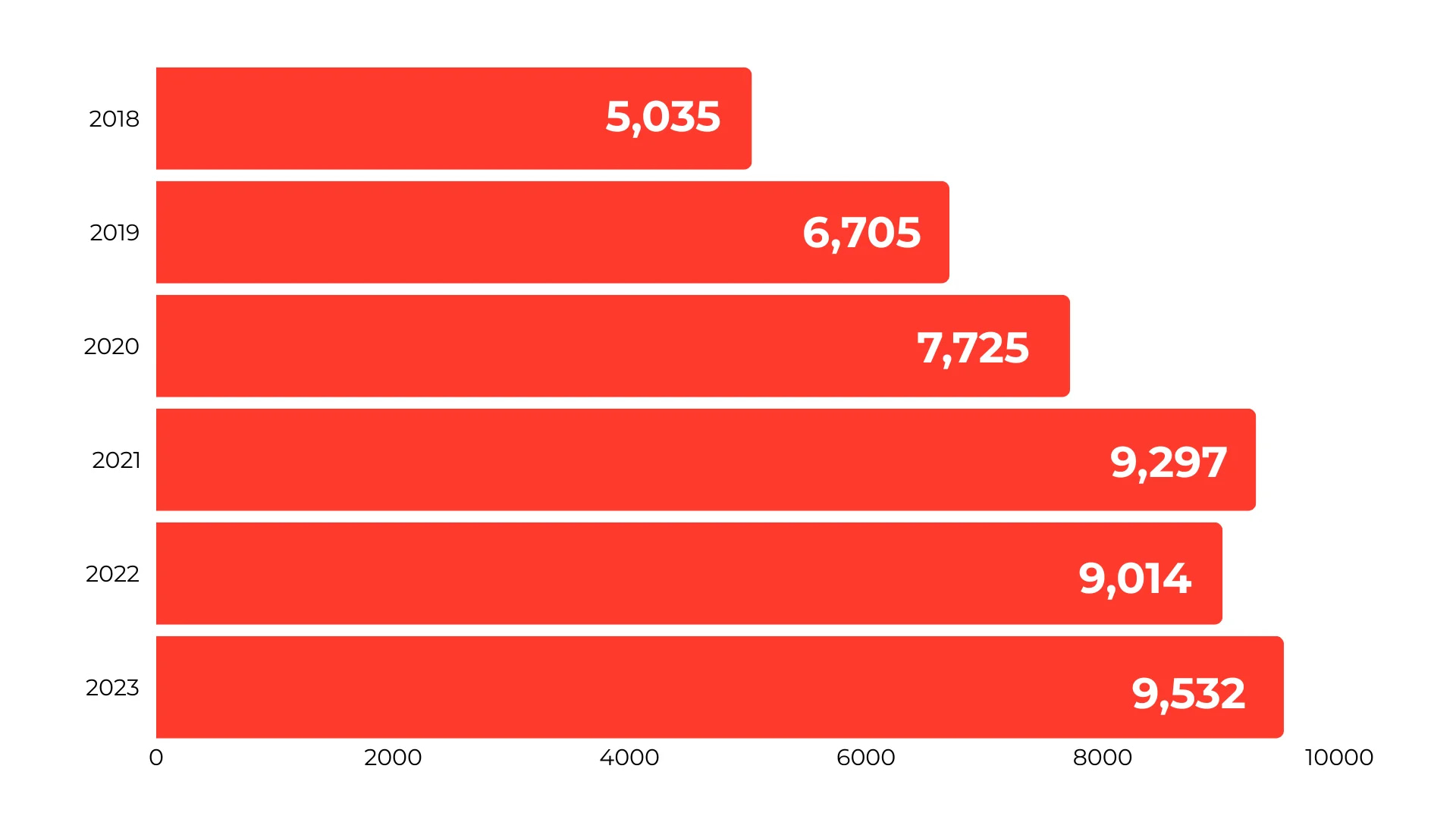
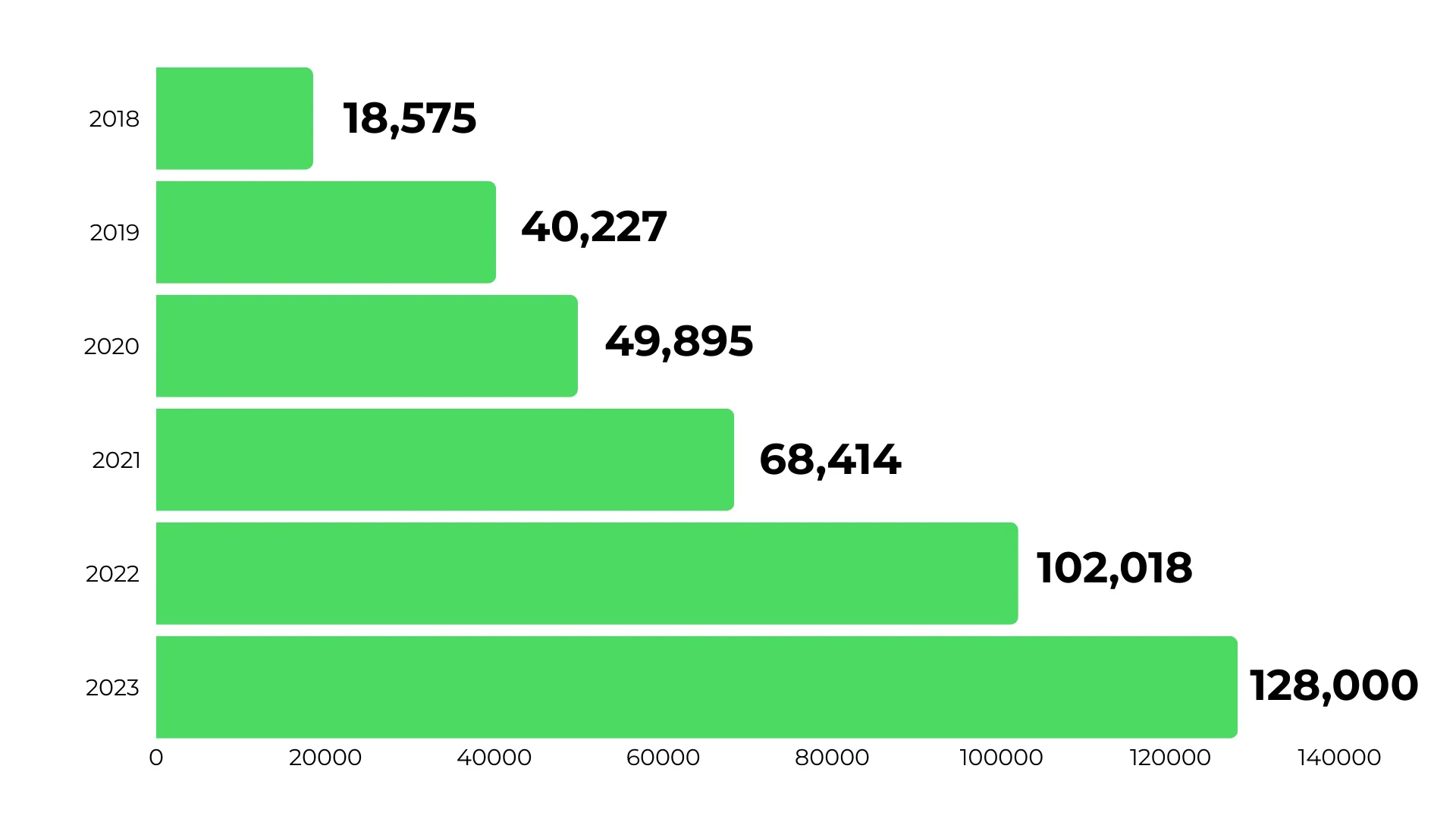
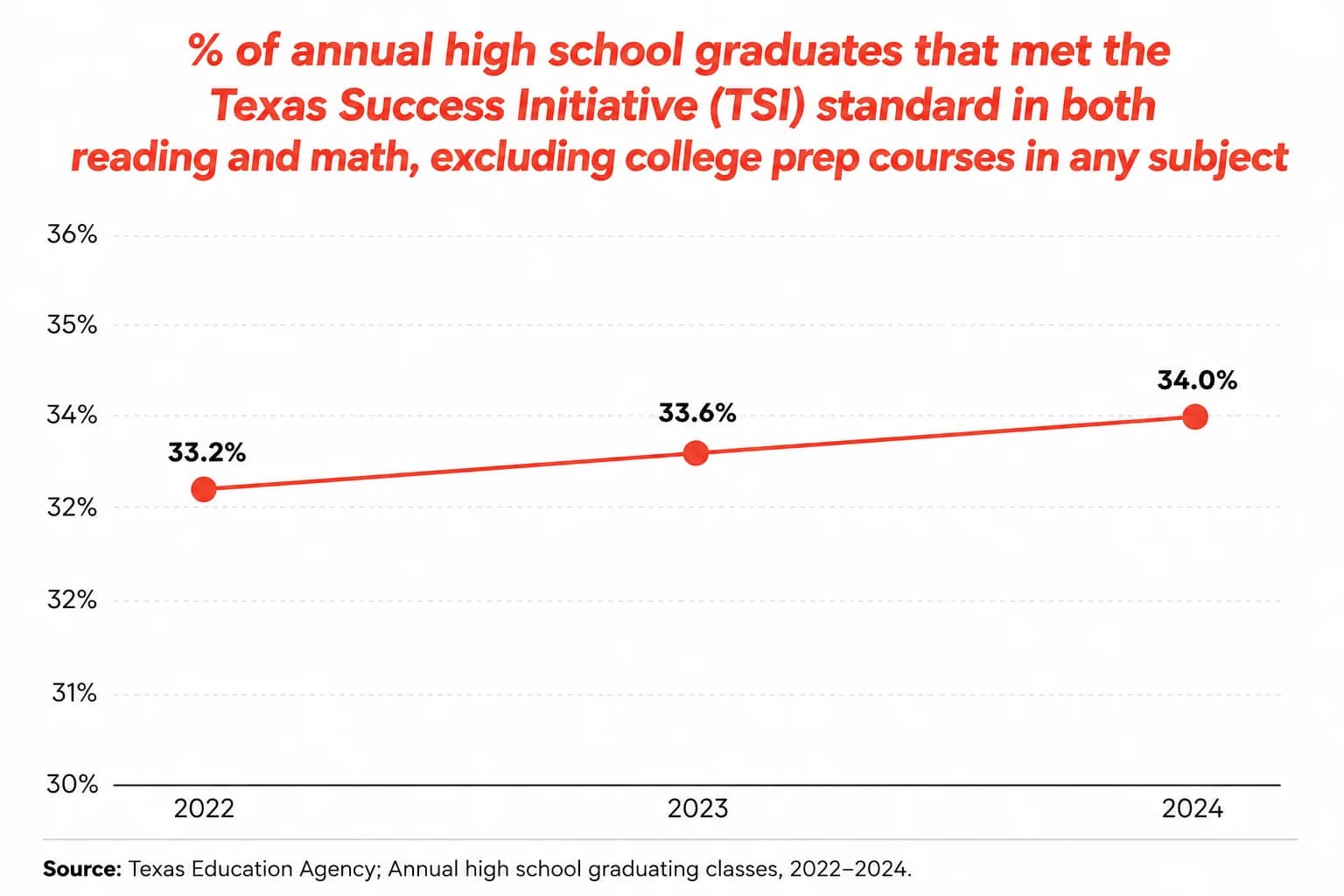
Texas students ready forToo many Texas graduates are leaving high school unprepared for college and career.Here's why.A H.S. diploma isn’t always a ticket to successEvery year, Texas graduates over 300,000 students. But only 37% earn a postsecondary degree or credential. And 1 in 3 “college-ready” students still needs remedial classes. Others leave high school without the skills to land a good job. Source: Texas Education Agency, 2025Quantitative OutcomesGrads with associate degrees% of Grads earned an IBC Grads with Level 1 & 2 certificatesUse the < > to view our data charts breaking down how Texas is equipping today’s students with real skills, real jobs and real hope for the future.# of specialized high schools# of specialized H.S.H.S. postsecondary access Grads with earned dual credit hoursH.S. grads meeting TSI in math, RLA% of Grads earned an IBCH.S. post secondary accessGrads with associate degreesGrads with Level 1 & 2 certificatesGrads with earned dual credit hoursH.S. Grads meeting TSI in Math, RLAView the data on how Texas is equipping today’s students with real skills, real jobs and real hope for the future.Specialized high schoolsTexas high schools are innovating to deliver better career-aligned programming to their students. Currently, Texas has more than 500 College and Career Readiness models that emphasize postsecondary programming. Specialized high schoolsHigh school access to postsecondary credentialsThe share of Texas high schools offering students access to a postsecondary credential has grown from 55.5% in 2018 to 90% in 2024. This steady growth highlights how Texas is expanding opportunities for students to earn valuable credentials while still in high school.High school graduates that completed associates degreesThe percentage of Texas high school graduates completing an associate degree has inched upward from 1.4% in 2018 to 3.1% in 2024. This steady growth shows more students are leaving high school with college credentials already in hand — giving them a head start on higher education and the workforce.High school graduates that earned an industry-based certification (IBC)The share of Texas high school graduates earning an Industry-Based Certification (IBC) has grown sharply — from 4.8% in 2018 to 35% in 2024. This rapid increase shows how more students are leaving high school with credentials that directly connect to workforce needs, giving them a competitive edge in today’s job market. By scaling access to IBCs, Texas is ensuring students graduate with real-world skills that lead to real jobs and stronger career pathways.High school graduates that earned Level 1 and 2 certificatesBetween 2018 and 2023, just 0.6% to 0.8% of Texas graduates earned a Level 1 or Level 2 certificate. This small but important start points to big opportunities for expanding job-ready credentials.More Texas graduates leave high school with dual creditSince 2018, the share of graduates completing rigorous dual credit coursework has increased from 20.7% to 25.1%, giving more students a head start on college and career pathways.Building a more college-ready TexasThe share of Texas high school graduates meeting the Texas Success Initiative (TSI) standard in both reading and mathematics continues to improve. By 2024, 34% of graduates met the benchmark without relying on college prep coursework, signaling steady progress in preparing students for success in postsecondary education.More students earning associate degrees in high schoolThe number of Texas students earning an associate degree while still in high school has steadily increased, rising from 5,035 in 2018 to 9,532 in 2023. This growth reflects expanding opportunities for students to graduate with a college credential already in hand, giving them a valuable head start on higher education and the workforce.Source: NEED DATA SOURCE# of students earning associates degree while in high school between 2018-2023More high school students earning postsecondary credentialsThe number of Texas students earning a non-degree postsecondary credential while in high school has climbed significantly, increasing from 19,963 in 2018 to 58,531 in 2023. This rapid growth highlights how more students are graduating with industry-recognized certifications and other credentials that provide immediate value in the workforce and strengthen pathways to future education.Source: NEED DATA SOURCE# of students earning a non-degree postsecondary credential while in high school between 2018-2023Every Texas student should leave high school prepared for their next step — whether that’s college, a career or both. We call this Dual Readiness and it should be the standard, not the exception.
Because we believe every child should be able to decide their own future.College or Career-ReadyWhy not both?The data shows where students have access to high-value courses and where they don’t. It also shows which courses lead to real outcomes.
That’s where Texas 2036 comes in. We created tools that gather this data and make it easy for you to use. With it, you can explore your districts and see what helps students thrive.Where are students getting the right support?Not all college and career readiness pathways lead to the same results.
Explore research tracking millions of Texas graduates to see which experiences are linked to stronger earnings, credential completion and college success. OutcomesExplore student outcomes Texas must make sure that courses students are enrolling in are leading to better long-term outcomes.
In this dashboard, pick the types of courses and outcomes you’re interested in. Then, adjust to see the isolated impact of the course on student outcomes.OutcomesEvery Texas student should have access to high-quality college and career opportunities.
Explore which campuses offer AP, dual credit, CTE, and other coursework, and see who is accessing those opportunities across the state. AccessExplore access Texas must make sure that courses students are enrolling in are leading to better long-term outcomes.
In this dashboard, pick the types of courses and outcomes you’re interested in. Then, adjust to see the isolated impact of the course on student outcomes.Access Expanding college and career opportunities can benefit students while bringing additional resources into Texas classrooms.
Explore how school districts and community colleges can expand high-value programs and estimate the additional state funding those opportunities could generate. SimulatorExplore simulator Texas must make sure that courses students are enrolling in are leading to better long-term outcomes.
In this dashboard, pick the types of courses and outcomes you’re interested in. Then, adjust to see the isolated impact of the course on student outcomes.Simulator